A sailor will instinctively describe Lošinj as remarkable. It is diverse; its towns are well-planned, steeped in history and maritime tradition, and have preserved...
Woven with unquestionable beauty, its coastline is intriguing, diverse and suitable for all sailors, while the interior, which is worth visiting, is lively and picturesque
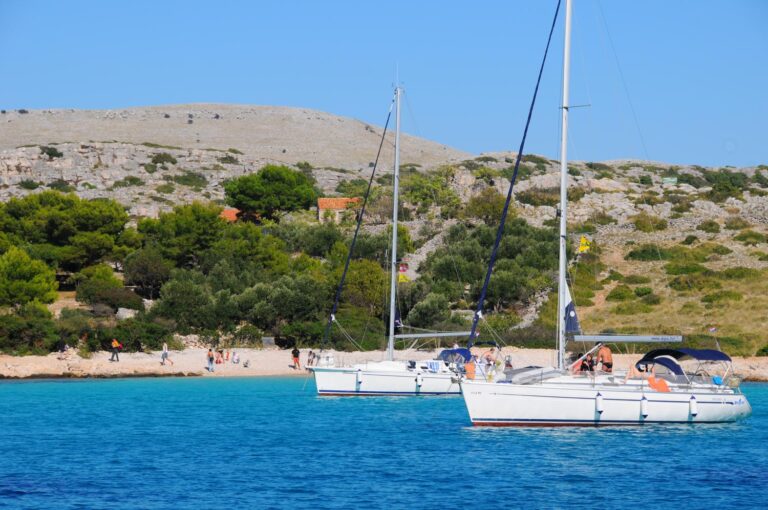
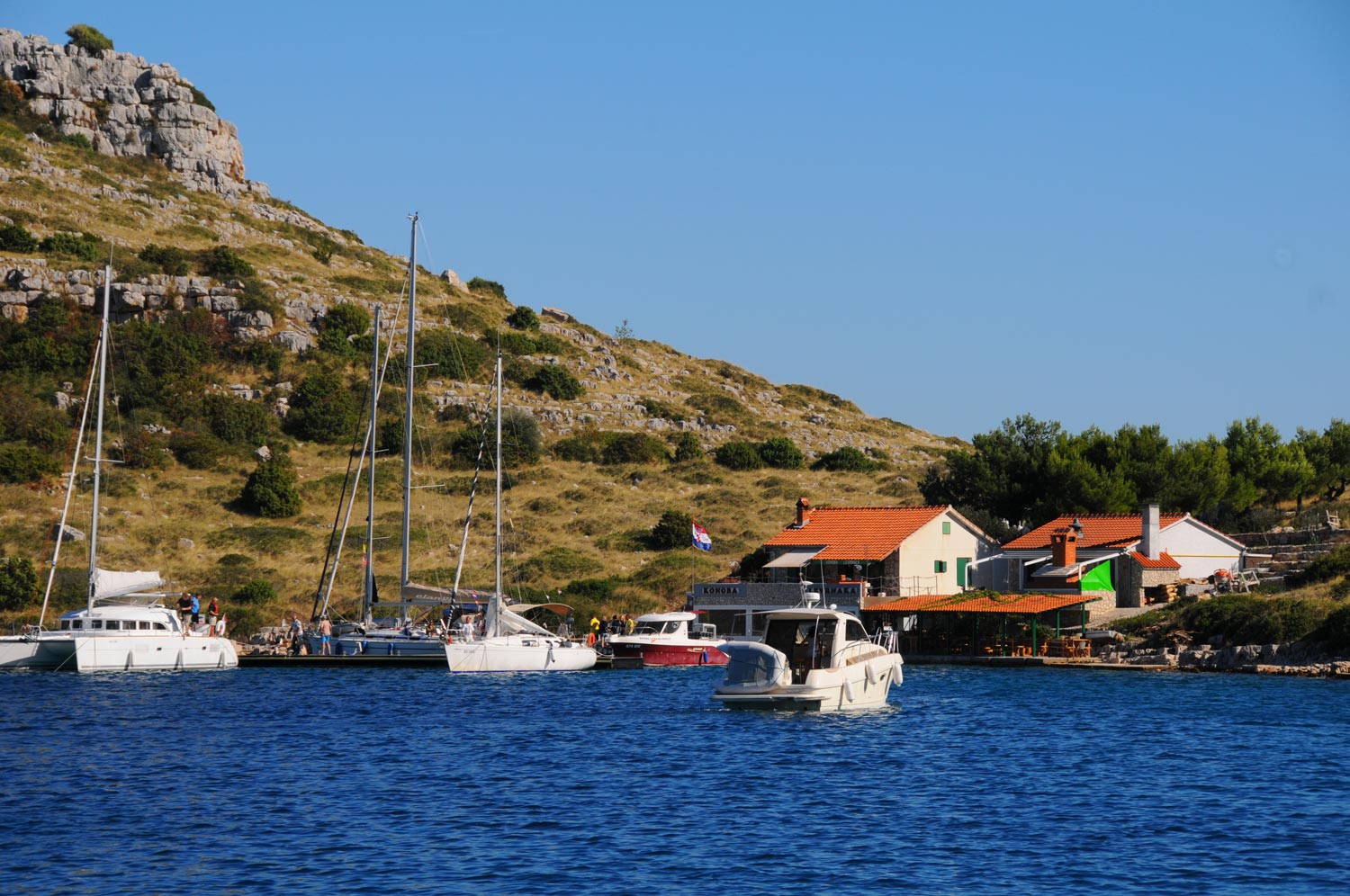
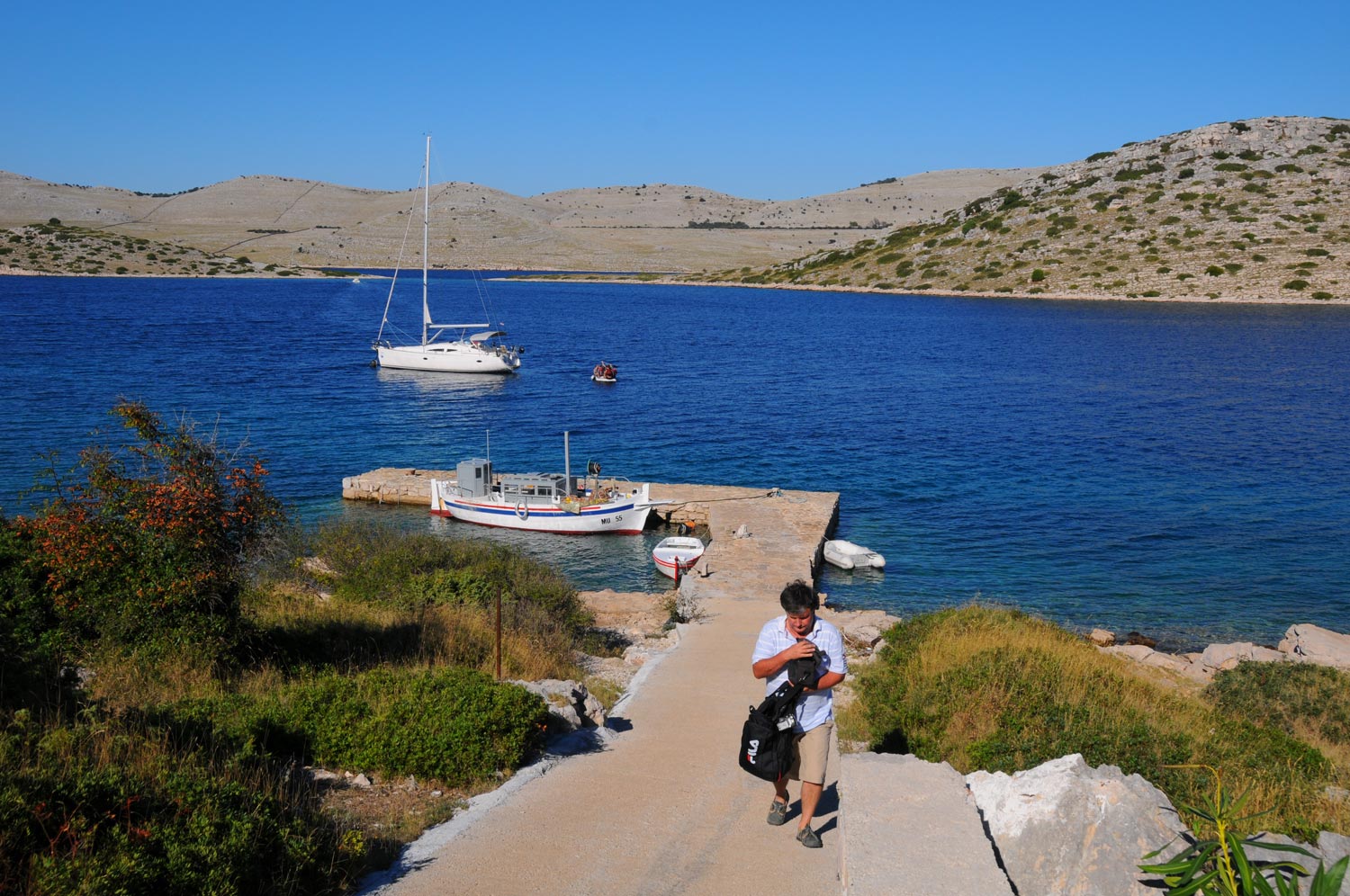
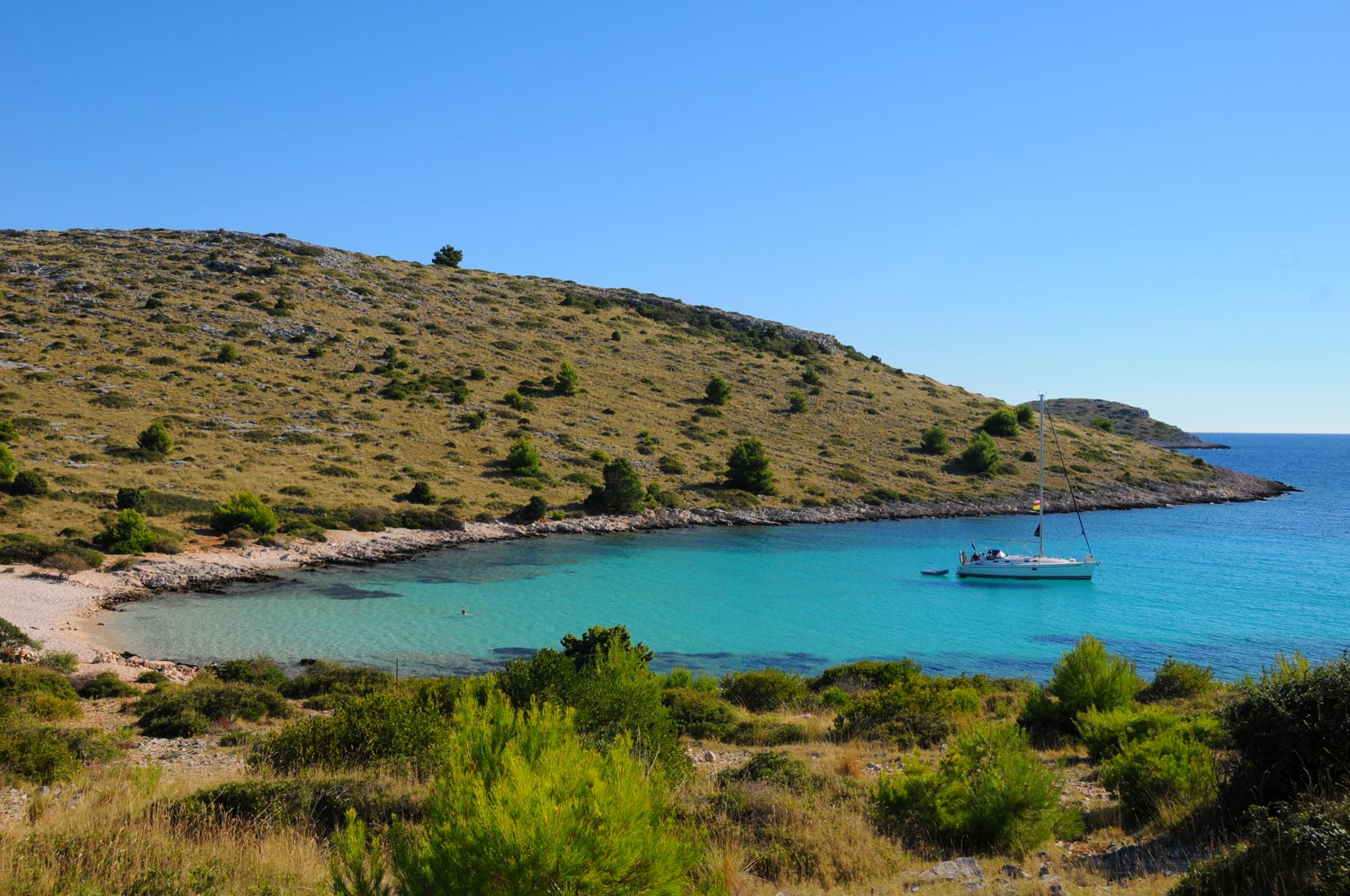
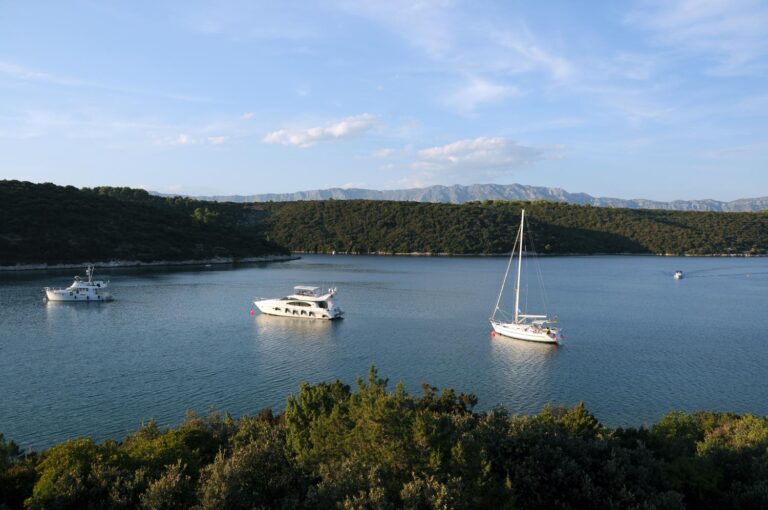
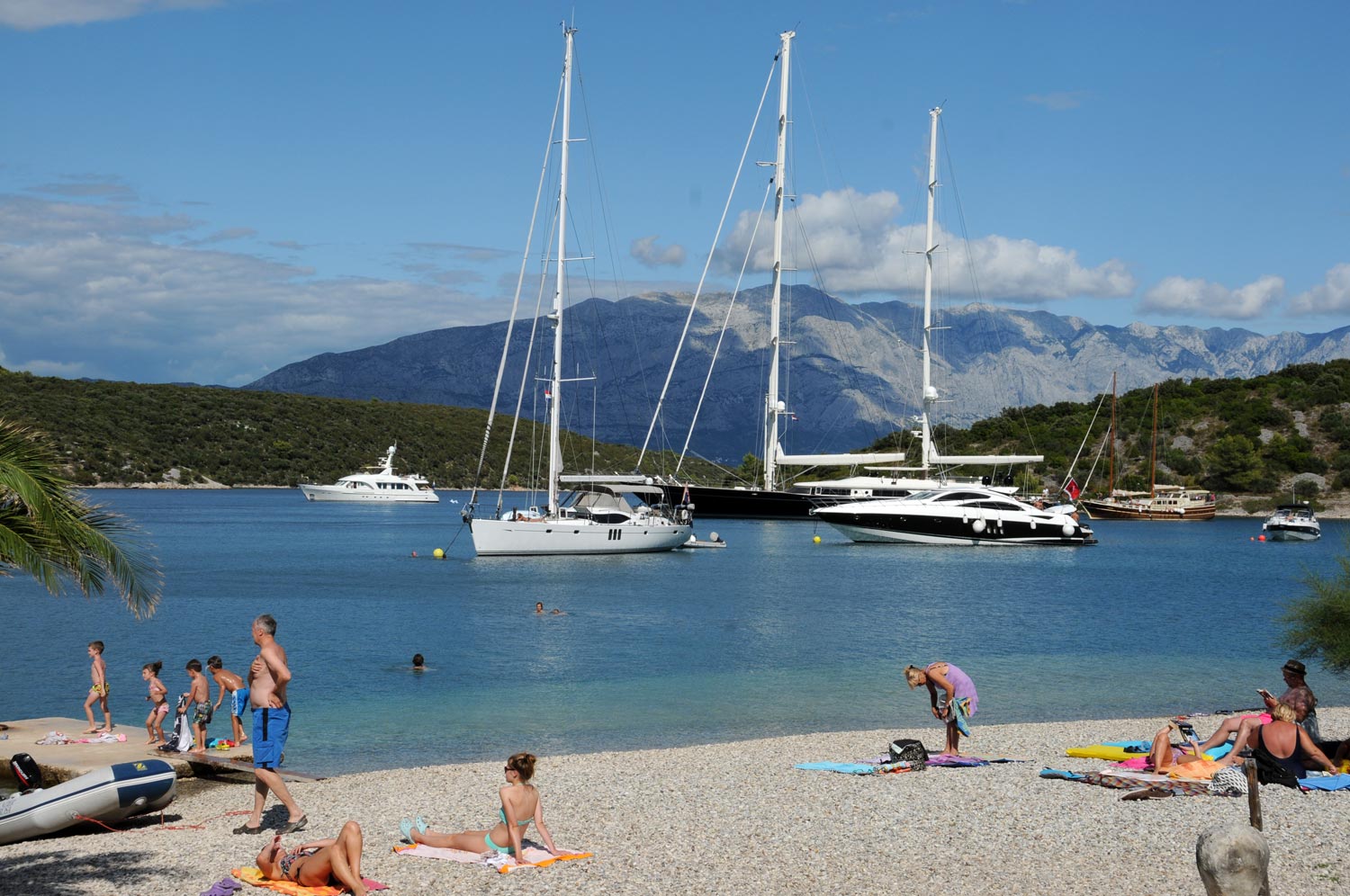
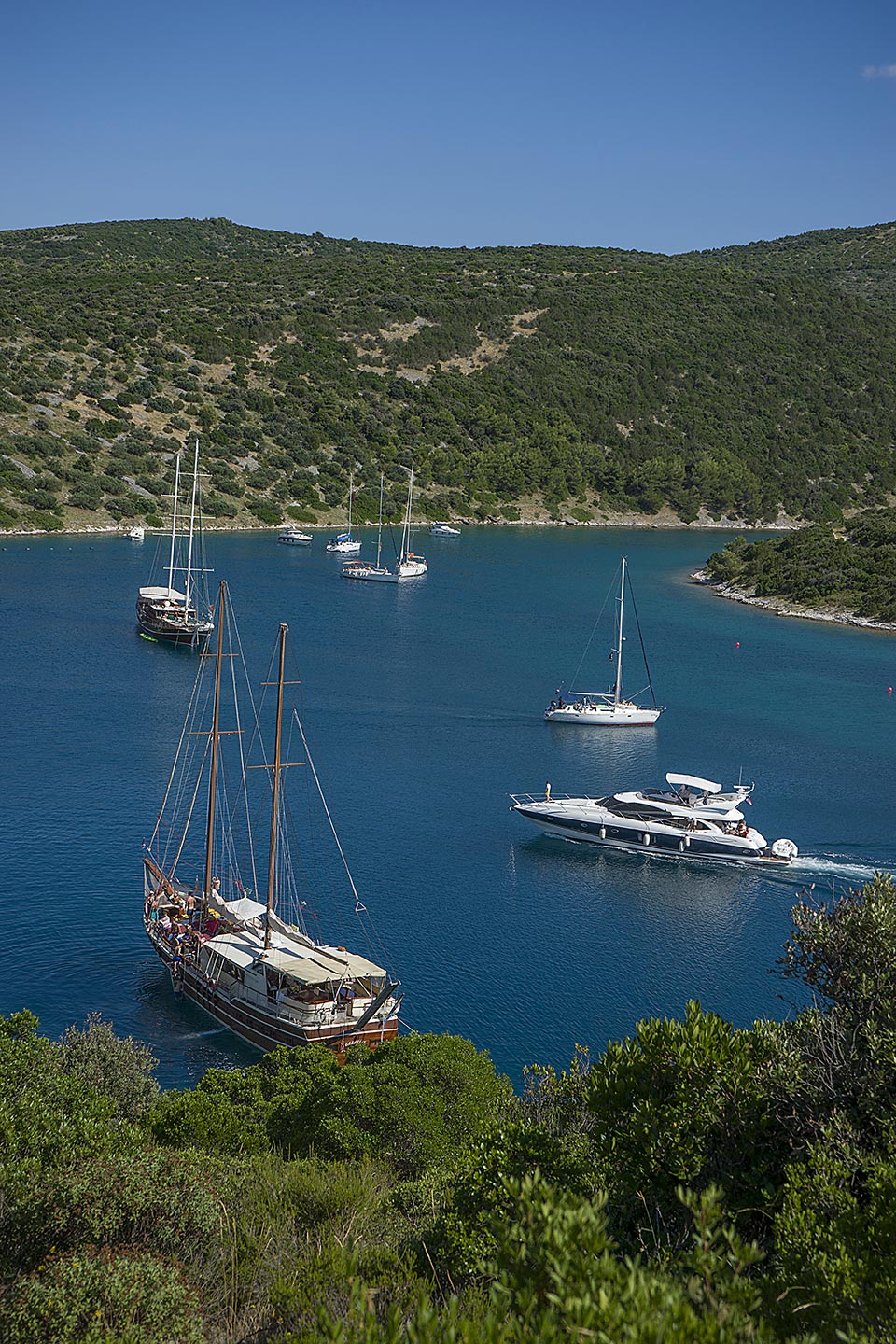
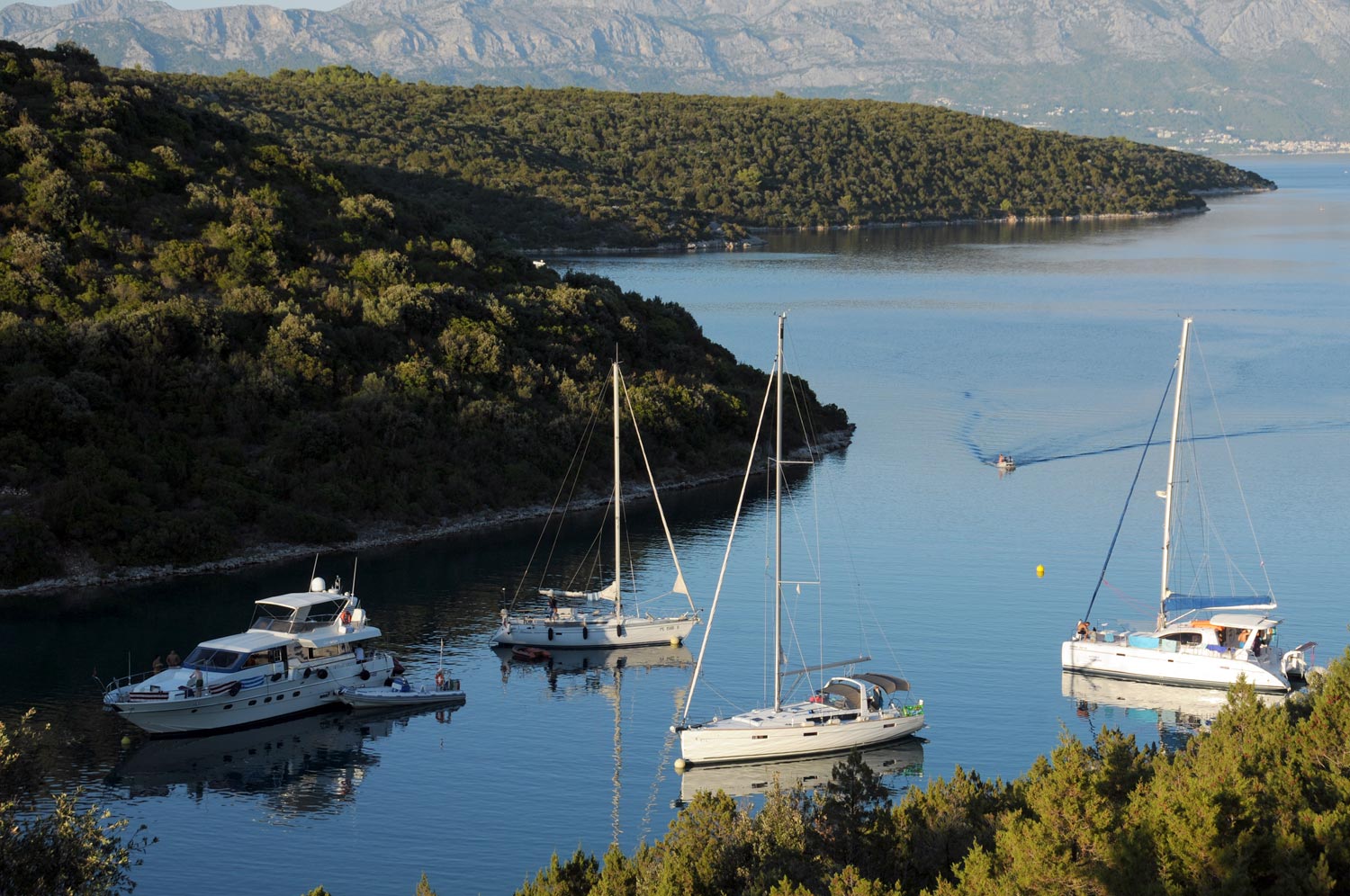
On Levrnaka there are two bays. The bay on the north side, which bears the same name as the island, is the main landing point. It is pretty deep, even by the shore, so you will see large, 30-metre yachts here, and many tie up stern to shore on the south shore. The floor is sandy and the anchor holds well. The maximum depth is just over 20 metres. On the north shore, there are some buoys, placed by the national park authorities (they disappeared for a while, but are back). There are also two piers. One is at the base of the bay, in front of Levrnaka restaurant (where there are also moorings, if you do not have an anchor), and the other is private, used by Edo and Miro Ježina, of Antonio’s tavern. These are the two places you can go to spend the evening in Levrnaka. The restaurant is fancier, while Antonio’s is simpler. There is another bay on the south side of the island, Lojena (the same name as the bay on Smokvica). It has a small, white beach, and is a pleasant place to anchor during the day. However, there are rumours that the island is overrun with rodents, which could inflict huge damage if they got aboard. We have never seen them, but better safe than sorry.
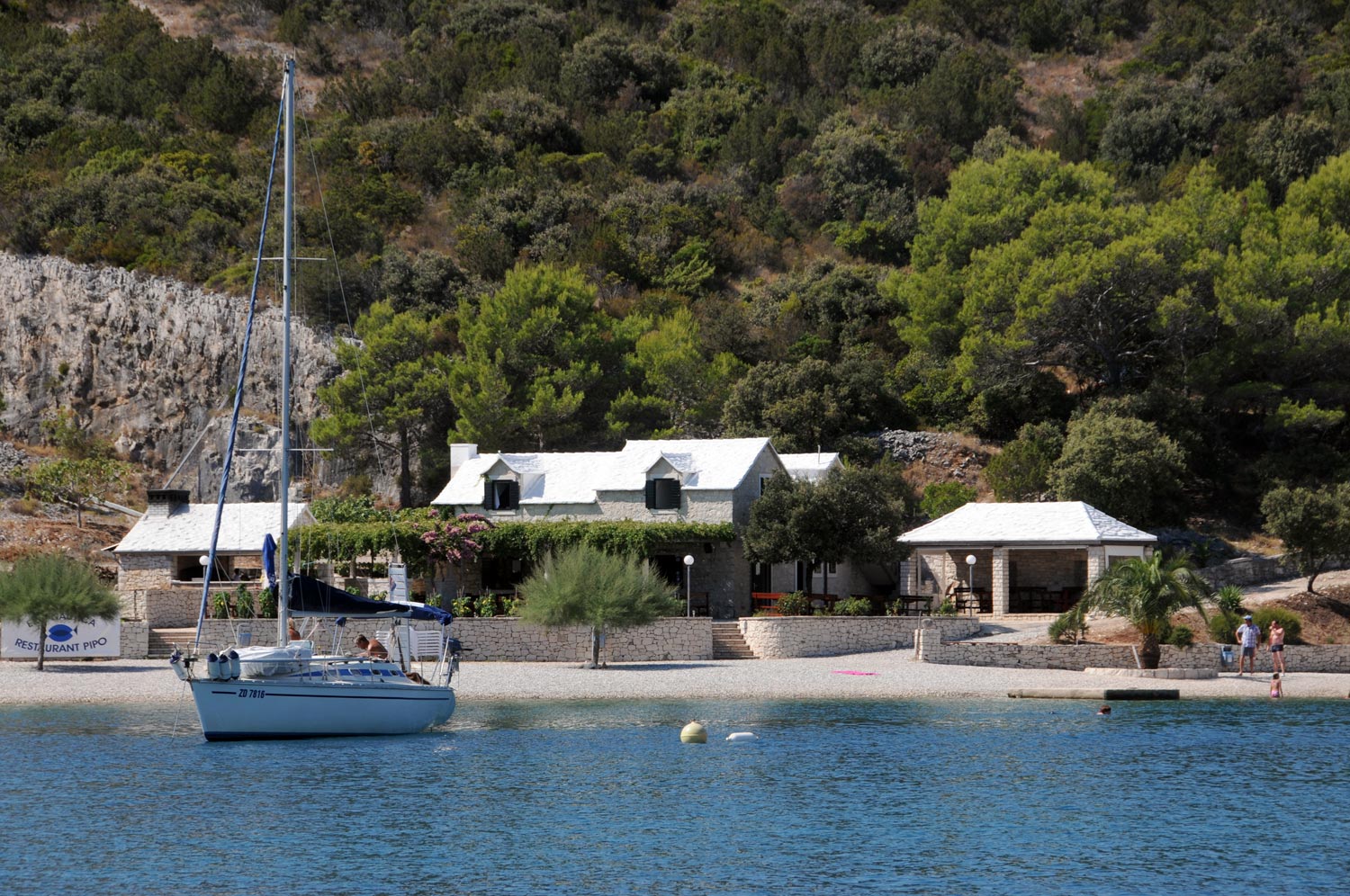
There are several bays on the north shore of Brač which provide safe anchorage, including Zastup, , Stipanska Harbour, Konopljikova and Vošćica. But the best sheltered bay is Luke, on the west side of Povalje Bay. All the arms of Luka Bay provide shelter from the bura and good anchorage. The best is Slatina Cove, in the south arm. There is a little cove on the point with a shellfish nursery, but there is plenty of room in the next section for a dozen boats, particularly if you tie up stern to shore. Larger yachts usually anchor between this cove and the west arm. There are eight buoys, belonging to Pipo’s restaurant, which also handles the concession for the entire west arm, where there are another ten buoys, while there is room for a dozen boats to moor on the jetty in front of the restaurant. The third possibility is the northern arm, where you should drop anchor and tie up stern to shore. During the past years, the popularity of this bay has grown. Many sailors come from Makarska and the surrounding villages, for a swim and a good meal. There are two taverns in Luke – Pipo’s and Rojen. Pipo’s owner, Božidar Eterović has renovated what used to be the old quarry warehouse in a completely traditional style, and believes in old-fashioned hospitality, as does his brother, Jure, who runs the restaurant, where you can enjoy seafood and local lamb dishes. They also keep the beach tidy and provide many small services.
Once you pass
the islet of Host and its lighthouse, you enter the mile-long Sveti Juraj Vis
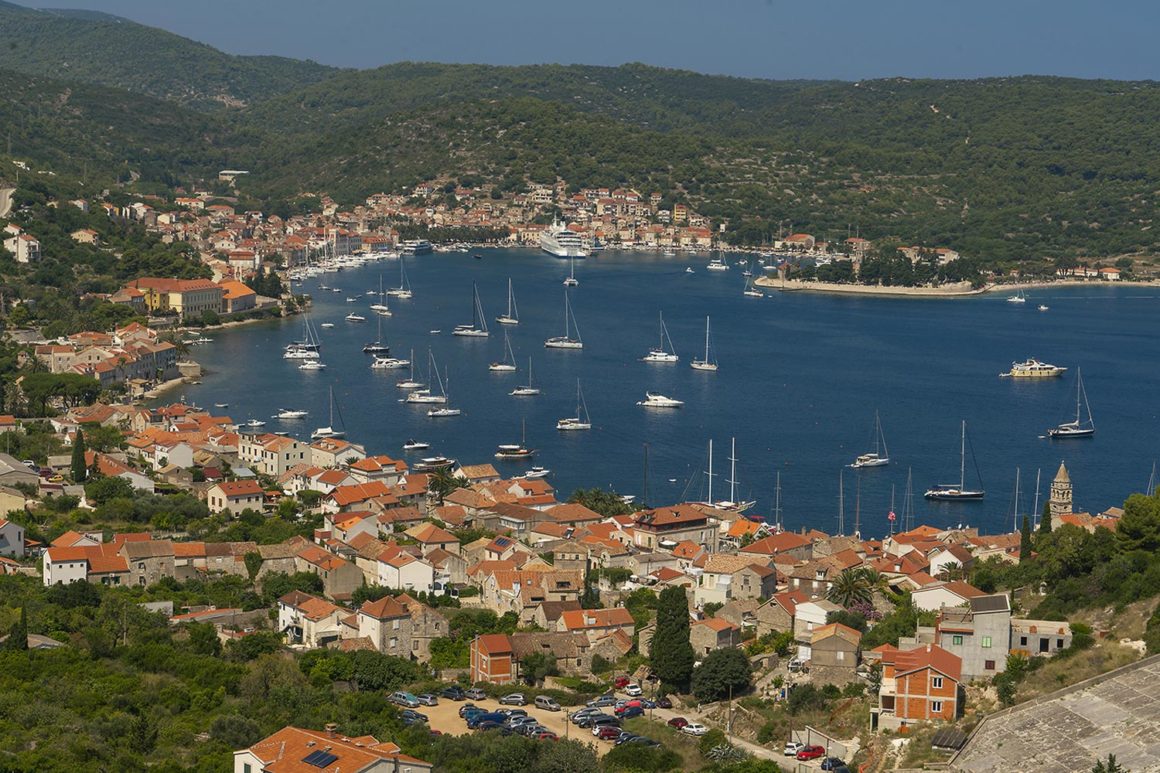
Harbour, a wide haven, well known since classical times. Although the harbour
is exposed to N and NE winds, you can find shelter even in those conditions in
the coves of Stonca, Sveti Juraj and Veli Mir on Prirovo peninsula. There are
many berths available on various waterfronts and piers, and most of the bay is
suitable for anchoring, so you can always find a spot there, even when the bay
is very crowded.
Most of the berths intended for sailors, around
sixty of them, are on the part of the waterfront at Luka. The whole waterfront there
is equipped with moorings and water and electricity connections. The depths
along the waterfront are mostly between 3.5 and 3.6 m. The moorings are strong
and anchored far from the shore, so they can easily accommodate even 20-metre
boats. The small customs pier and seasonal maritime border crossing are also
located on this part of the shore. The berths at Luka are quite safe. Your stay
may be uncomfortable there during the bura,
but there is no real danger. The reception building, where the fees for using
berths can be paid, is located close to the waterfront, in the small street
behind the first row of houses. The toilet and shower facilities used by
sailors are located next to the reception building.
The berths in the other part of Vis Harbour,
called Kut, are the best choice during the jugo
and easterly winds. In these winds, the entire part of the bay will be completely
calm. They are also safe during the bura
or the maestral. Your stay will be
least comfortable during the tramontana
or bura blowing directly from the
north. This waterfront was
extended last year and now has enough space for around 40 boats, if they are
packed together quite tightly. The depth along the waterfront is between 2 and
4 m. All the berths are equipped with moorings and water and electricity
connections. The reception where fees are paid is right next to the waterfront.
It also houses a tourist agency, with bicycles and scooters for rent, as well
as other tourist services. The toilet and shower facilities at Kut should be
finished in time for the 2015 tourist season. There are around 40 buoys
anchored between the waterfronts at Luka and Kut, and anchoring is also possible
in Stonca Cove and by Prirovo peninsula.
Vis is a small town with a rich history and
exceptional atmosphere. Do not miss an opportunity to see the remains of
ancient Issa, the many Renaissance
mansions, forts built when the English or the Austrians ruled the island and
the museum inside the biggest fort. Vis is famous for its food and wine-making
tradition, so make sure to visit one of the many restaurants in town.
(Port authority office, seasonal maritime
border crossing, police station. There are a community health centre, pharmacy,
bank, post office and fuel station in the town.)
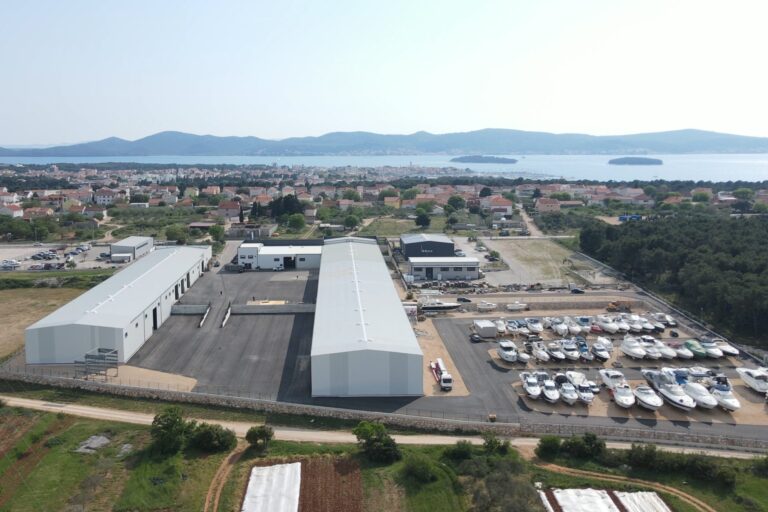
With a capacity of 600 vessels, Pauman Dry Marina is the largest of its kind on the Adriatic and spans an area of 37,000 square meters.
With a capacity of 600 vessels, Pauman Dry Marina is the largest of its kind on the Adriatic and spans an area of 37,000 square meters.
A new dry marina, Pauman, has opened in Biograd. With a capacity of 600 vessels, it is the largest marina of its kind on the Adriatic. The opening of Pauman Dry Marina took place during the five-day event “Slovenian Weekend” in the Industrial Zone above Biograd na Moru. The marina is owned by the Pauman family from Slovenia and covers an area of 37,000 square meters, of which approximately 11,500 square meters are enclosed halls.
Dry Marina Pauman is located on Bukovačka Street in Biograd na Moru.
Dry marinas with enclosed halls are increasingly in demand among boaters. They offer a particularly convenient solution for storing motorboats and yachts, especially for owners who live far from the sea or only use their vessels during holidays. Boats stored indoors age more slowly and retain their value longer. This is exactly why such facilities are becoming more common along our coast.
The Pauman Marina in Biograd was officially opened by Matjaž Han, Slovenia’s Minister of Economy, Tourism and Sport. The ceremony was attended on behalf of the City of Biograd and Zadar County by Šime Mršić, Director of the Vransko Lake Nature Park Public Institution. The guests were welcomed by host Gorazd Pauman.
With a capacity of 600 vessels, Dry Marina Pauman is the largest of its kind on the Adriatic.
The marina offers storage for vessels in a large, pavilion-style facility. It also provides vessel servicing and maintenance. Clients can take advantage of a transport service for boats from Biograd and surrounding areas to the marina. The service zone of the marina is equipped with state-of-the-art diagnostic technology. Year-round services include mechanical, painting, carpentry, and electrical work. All boats in the marina are under 24-hour supervision by professional staff.
Additional services available to clients include antifouling, upholstery, polishing, and boat washing, as well as teak installation. On request, comprehensive winter maintenance can be arranged, including engine preservation with antifreeze, battery charging, and ventilation of cabin spaces. De-preservation of engines and high-pressure washing of the underwater hull are also offered.
The marina’s service zone is equipped with state-of-the-art diagnostic technology.
Pauman Dry Marina also offers trailer parking either inside the hall or in a fenced outdoor area. Long-term parking for cars and camper trailers is available as well. Clients can rent annual parking space for their camper trailers, either indoors or in the outdoor fenced area. Forklift services with a 3.5-ton capacity are also available upon request.
Pauman Dry Marina is located at Bukovačka Ulica in Biograd na Moru.
Dry Marina Pauman was inaugurated during the five-day event “Slovenian Weekend” held in the Industrial Zone above Biograd.The dry marina also offers trailer parking, either inside the hall or in a fenced outdoor area.
At the height of summer, our editorial team set off on a journey beyond the open sea. The destination: Palagruža. We returned brimming with impressions and already resolved to sail back there next year.
Ever since spring, Mladen, Marko, and I had been making plans to visit Palagruža. None of us had been in years, yet all of us shared a wealth of memories tied to the place. I’d been there a few times by boat—mostly visiting lighthouse keepers, and once on a fishing trip. Twice, I even sailed there aboard an Elan 36 during the Palagruža Regatta, back when it was still held. I still remember the sight of us rounding the island under tramontana winds, the sun slowly sinking into the sea.
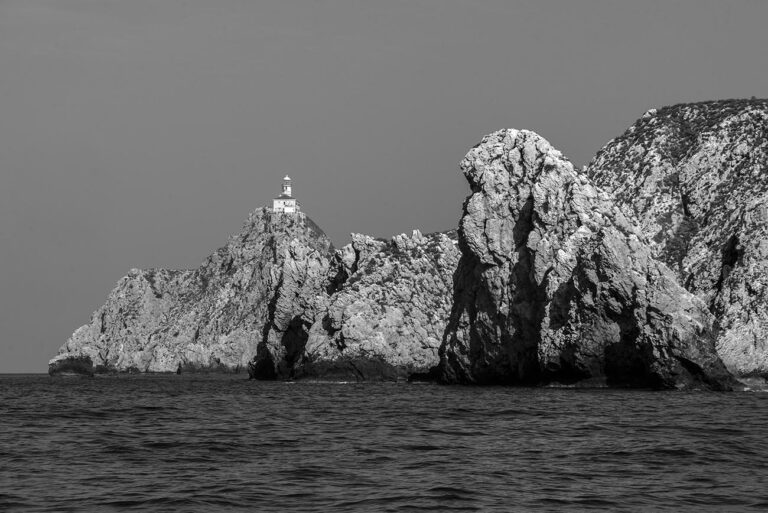
When Palagruža rises from the sea A view of Mala and Vela Palagruža from the east – the island appearing almost mythical. Photo: Mladen Šćerbe
Among us, Marko is the true Palagruža veteran. As a boy, he spent days and nights there fishing with his father’s crew, back when nets were still cast around the island. He slept aboard a leut and on the shores of Mala Palagruža, and even climbed its peak. Mladen, too, had anchored off the island around ten times during his years skippering, ferrying boats, and on personal voyages. We had long planned to sail there together, tie up to the black buoy, and stay for a few days. But, as it often happens, the right time never seemed to come. Summer was well underway when we finally made the decision to go.
A smooth arrival XO DFNDR brought us safely to Palagruža – calm sea, clear destination. Photo: Mladen Šćerbe
The opportunity came in the form of Defender—a fast, uniquely designed Finnish speedboat, built for all seas—which friends kindly lent us. It was more than capable of carrying us safely into open waters, twenty miles off the Italian coast. Naturally, we decided to first swing by Hvar to pick up Marko, and then head straight for Palagruža. So, on the early afternoon of August 1st, Mladen and I departed from Marina Agana en route to Vis. The first stop was Trogir to refuel, followed by Podstine. We cruised slowly through the Vrata passage, then, with a fresh tramontana wind, set our course for Hvar and soon moored to a buoy just below Marko’s house.
Palagruža, As It Once Was
True to his fisherman roots, Marko welcomed us with a hearty meal of soup and boiled veal. We toasted to his future fishing trips and, with a glass of Plavac in hand, stayed up chatting until 3 a.m. By five, we were up again, loaded the boat with gear, and finally set off. The sea was like glass. At a steady 25 knots, the 47 nautical miles to Palagruža would take just two hours. Fuel consumption was minimal, and we had plenty of time to talk.
Marko was, of course, our chief storyteller—and we didn’t let up. What did you bring to eat and drink? Where did you sleep? How many were in your crew? He answered with delight, recounting how they’d arrive in the afternoon, melt down the floats (popovnice), then slip the leut close to the shore at Medvidina on Mala Palagruža. There they’d dine on whatever provisions they’d brought from home and turn in early.
At dawn, they would haul in the nets, which then took all day to sort and clean from ašpringa—a small, hard coral that tangled them up. In the afternoon, they’d cast the nets again, ready to haul them up the next morning. The catches were abundant, mainly lobsters—the primary reason they came—along with scorpionfish, combers, red mullet, and occasionally a dusky grouper. By the second day, fresh catch was already on the menu, usually comber and mullet, which didn’t keep long. Marko even managed to climb the 51-meter peak of Mala Palagruža. The first time, he barely made it back down—but it got easier after that.
Mondefust reveals all View from the eastern hilltop – the lighthouse, Žalo bay, and Salamandrija stretching below. Photo: Mladen Šćerbe
They would stay three, often four days, until their iceboxes were full or they ran out of ice. The lobsters were stored in wooden crates originally used for Jaffa oranges, lined with gošćica—a type of sea grass that preserved moisture—and submerged in the sea. Even then, they wouldn’t last much longer than a few days.
Emerging from the Haze
There was hardly anyone at sea that morning, and visibility was poor due to haze. At six a.m., the charter fleet and recreational boaters were still asleep—only the occasional fishing boat dotted the horizon. After passing Sušac, even those disappeared. Two cargo ships loomed in the distance, and then we began spotting longline markers—a sure sign we were close. These are usually set on the sea shelf just three and a half miles from Palagruža.
And then, suddenly, there it was—rising from the haze, reddish-brown and solitary in the middle of the sea. Our spirits lifted instantly. We reached for our cameras, ready to capture the moment. We even considered sending a selfie with the island in the background, but thankfully, the signal was too weak—and we didn’t even try.
Chasing the Perfect Frame
We decide to circle the island first—both Velika and Mala Palagruža—before setting foot on land. So we do just that. I steer as Mladen directs, trying to catch the perfect angle of Mala framed against Velika. But he quickly notes that we’ll need to return in the afternoon when the light will give us a layered shot of both islets. I nod in agreement, and we head toward Velika, where a German sailboat is moored in front of Žalo. A small Plovput vessel approaches us, carrying Vojo Šain and a charming lady who, we soon learn, is his future wife, Manuela. They’re trolling as they wait, hoping to catch something for brunch.
Vojo and Manuela – the lighthouse duo In the boat of the keepers – a blend of everyday life, sea, and affection. Photo: Mladen Šćerbe
They’d arrived the day before to start their monthly shift, joined by Krešimir Tomašić. Vojo has been stationed on Palagruža since 1998, and Krešo is his fifth lighthouse partner. Vojo and Manuela—both remarrying happily—live in Čara on Korčula, where they tend a small vineyard of Pošip and a larger olive grove. Ever since her first visit to Palagruža, Manuela fell in love with the place and has vowed never to miss a shift, even in winter.
As their trolling nets come up empty, we leave them to it and slowly cruise beneath Palagruža’s imposing dolomite cliffs. Towering 87 meters above sea level, the cliffs rise steeply from the sea, crowned by the 29-meter-tall lighthouse. We steer toward Volić and the Western Tip.
A Glimpse into History
As I gaze up at the largest lighthouse ever built by the Austro-Hungarian Empire on the Adriatic, I’m reminded of how quick we are to credit Austria for our ports and lighthouses—forgetting that much of the real work was done by our own people. In fact, the contract to build this lighthouse was awarded to Ante Topić from Vis. The project manager was Bože Poduje, also from Vis, while construction was overseen by Vicko Marinković from Komiža. A hundred men, mostly locals, worked on it for a full year, hauling materials by traditional boats—gajete and bracere.
But enough history. Anyone who wants to dive deeper should pick up Palagruža: Diomed’s Island by archaeologist Branko Kirigin. It explores how the first people arrived in the Neolithic, and whether this island was really home to the Trojan hero Diomedes. Did he have a sanctuary here? What do the ancient ceramics and artifacts tell us? Did the Romans build a lighthouse or a temple on Palagruža? What about the fortress that once stood here? Why does even the Middle Ages cast such a dark shadow?
Palagruža’s Stradun Vojo and Manuela walking the winding path from Žalo up to Salamandrija – a local version of Dubrovnik’s promenade. Photo: Mladen Šćerbe
The book also covers the Italian garrison stationed on the island, the Austrian bombing during WWI that damaged both military installations and the tiny church of St. Michael, and partially destroyed the lighthouse. Then there’s the invaluable work of Joško Božanić, tireless chronicler of Komiža’s fishing heritage, where Palagruža holds almost mythic status.
Under a Sky Full of Stars
Back at Žalo, we tie up to the lighthouse keepers’ buoy, help Vojo unload his boat, and begin the 800-meter hike up the winding path to the lighthouse. In summer, nothing much blooms on Palagruža, though the caper bushes are still green, their large, unopened buds swollen with seeds. In spring, picking them is a favorite pastime for the lighthouse keepers.
We follow the ridge-top trail that runs across a small plateau called Salamandrija. From here, the view sweeps out across the open sea—a scene that even seasoned islanders from Vis and Hvar would call kulaf. To the north lies a slope with a thin layer of soil where, once upon a time, grains and grapes were cultivated. Today, it’s overgrown with a forest of tall Euphorbia dendroides. I’ve never seen that hardy shrub grow so tall.
We pause on a bench along the trail. Marko, our resident botany expert, launches into a lecture on the toxic sap of the mlječika, how it will soon erupt into brilliant color. Palagruža has no woods, so the familiar summer soundtrack of cicadas is missing. Instead, swarms of tiny flies come buzzing in waves—flapping at them with our hands, we must look like helicopters from afar.
Euphorbia tree – botanical queen of Palagruža A rare sight of this shrub growing tall, resilient and unique. Photo: Mladen Šćerbe
Brunch and Story Time
It’s not even 9 a.m., and the heat is already oppressive. We finally reach the lighthouse and retreat into its thick stone walls—cool in summer, warm in winter, no air-conditioning needed. Once home to three lighthouse keeper families, the building now houses well-appointed apartments. They’re empty today, but tomorrow, two Slovenian families are arriving for a peaceful week off-grid.
As we dig into brunch—homemade food brought by Vojo and Manuela—we swap stories about past guests. There was a group of Italian freediving champions who were caught spearfishing illegally and had to be sent packing. Then an Austrian surgeon couple working in smoggy Singapore, who spent every evening on the terrace, mesmerized by a sky bursting with stars. Slovenians, it seems, are frequent visitors—and very much welcome. To them, Palagruža is sacred ground.
We chat about the winters—mild and dry, but often cut off completely during storms—and about what it’s like when the lighthouse shakes under a siege of thunder and lightning.
On the lighthouse terrace A view that takes your breath away, with shelter from the heat – a true summer refuge. Photo: Mladen Šćerbe
The Vanishing Fishermen
And inevitably, the talk turns to fishing. Just a few years ago, as many as thirty boats would gather at Žalo—mostly Komižans and Višans. When their deck lights came on at dusk, it looked more like a town than a remote rock. Now, there are only two or three boats, still mostly Višans and Komižans—who respect the sea and follow the rules. The traditional nets that Marko’s father used are now banned, to help preserve the marine habitat.
We could have kept talking forever, but we wanted to see everything. No need to recount it all. We climbed the lighthouse tower, visited the weather station, wandered the island. We even trekked to Stora Vloka, a cove on the northwestern side that offers shelter from the jugo. I couldn’t resist a swim in the crystal-clear sea. Then we crossed to the other side, toward the radar and surveillance cameras monitoring the border.
I don’t know if the crew at the National Maritime Data Center in Zadar recognized us on their screens, but they surely saw three enthusiastic, slightly graying men stumbling about like schoolboys on a field trip.
The heart of the lantern The light system inside the tower – the guardian of the Adriatic night. Photo: Mladen ŠćerbeStora Vloka A calm cove on the northwest side, ideal for a swim and quiet break. Photo: Mladen Šćerbe
Twilight and Kanjac
Back down at the shore, we interrupted Vojo’s nap, took another dip at Žalo (Marko and I swam, Mladen stayed dry), and noticed a small fishing boat from Vis anchoring nearby, waiting for dusk. But we weren’t done—Mladen still had to capture his perfect shot, and Marko was determined to fish.
The daily catch One pirka and fifteen red scorpionfish – enough for dinner (for some of us). Photo: Mladen Šćerbe
After gathering a few lupari (hand lines), Vojo and Manuela ferried us back to the boat, and we spent about an hour circling Mala Palagruža near some pot markers. Not in vain—fifteen fine kanjci (combers) made their way aboard.
Not that Mladen and I got to eat them. After nearly three hours of rough tramontana winds, we dropped Marko off at Mala Garška on Hvar and continued on to Marina Agana to return the Defender. Then home: Mladen toward Rab, me back to Makarska.
No matter—we’ll return next summer. This time, for three full days on a sailboat, with daily catches and meals at sea. And maybe we’ll even sail out to Galijula to see if the biggest kosmeći in the Adriatic still reign there. ? [link to article]
For years, we have been recommending restaurants, inns and taverns where you can dine especially well to sailors who appreciate good food. You will recognize them because their owners proudly display the Gustozi Đir (Gourmet Tour) sticker at the entrance. The best among them have been awarded stickers every year. Others have joined us in the meantime, while others we used to recommend have been dropped.
Our intention has been to guide you to places offering delicious cuisine in order to share with you the pleasure of dining by the sea. On the Gourmet Tour, which has always had strict criteria, are restaurants and taverns where dishes are prepared by our favorite chefs, some of whom have also earned the title of super chef. Our current selection is the result of twenty-nine years of systematically evaluating seaside restaurants on the pages of More, the leading Croatian nautical magazine, whose editors have prepared this brochure. Together with the list of restaurants that we recommend to you every year, we shall introduce you to on of our super chefs. This year, it is Ante Toni Bjelančić, the owner and cook of the restaurant Gastro Mare located in the cove of Kobaš in Ston bay.
If you dine in places on our tour, please tell us about your impressions of the food, and the degree of your overall satisfaction with the ambience, service, prices etc. at the proposed restaurants, inns and taverns, but also tell us about your own gourmet discoveries. Our e-mail address is info@more.hr, and you can also send your comments and ratings to our website, www.more.hr.
In the Bellissima version, the Italia Yachts 9.98 offers an excellent balance between comfort and performance. The boat is easy to trim, very light on the helm, forgiving of mistakes, and can be handled by a two-person crew.
Italia Yachts 9.98 is not a brand-new sailing boat. This small but powerful performance cruiser was built about ten years ago and received excellent reviews right away. Over the years, it has been optimized to perfection, winning the ORCi World Championship twice in a row. Some Croatian sailors are quite familiar with this boat, as they had the chance to study its stern closely during the ORCi World Championship in Šibenik. Three years ago, the Italian Yachts representation for Croatia was taken over by Yacht Match from the Netherlands. Their business principle is unique in offering a complete, turnkey service for clients—handling purchase, outfitting, and later, charter management of the boats. Yacht Match has bases in England, Sweden, and Croatia, allowing clients to choose where they’d like to pick up a boat and sail it.
The Italia Yachts 9.98 that we had the opportunity to test was purchased by a foreign client who decided to keep it in Split. On the day of the test, luck was on our side. It was sunny and clear in Split following the previous day’s bora, and in the afternoon, a pleasant tramontana wind was blowing. Dirk Agter, one of the owners of Yacht Match was waiting for us on the boat in ACI Marina Split accompanied by regional manager Luka Pražić and Nikola Akrap from North Sails sailmaker who was also eager for the test to start. We asked Goran Martinović – Orca, a skilled sailor from Split known as one of the organizers of the Sušac 100×2 and Saint Nicholas races for singles and pairs, to test the boat and give us his expert opionion. Goran is currently employed as a coach for optimist class at Mornar Yacht Club.
CARBON REINFORCEMENT Even at first glance, the Italia Yachts 9.98 reveals that it is primarily designed for racing. It has a relatively narrow stern and a spacious, well-organized cockpit. The model we tested was equipped for cruising as well. To be specific, the 9.98 Italia Yachts model is delivered in two versions: Fuoriserie and Bellissima. As the name suggests, the Fuoriserie is intended solely for racing, with a stripped-down interior, without any unnecessary equipment like beds, refrigerators or laminate. Bellissima is a compromise; it’s still agile and fast but has a fully fitted interior suitable for relaxed family cruising. The Bellissima interior includes wooden floors, a water tank, and a boiler. Below deck, you’ll find a forward cabin with a double bed, a saloon, and an additional cabin and a toilet. The navigation table is spacious and well-positioned. So, the interior of Bellissima is thus equipped for cruising, while the outer design is for racing. With the tested model Yacht Match showed us the best of both worlds.
With the 12 to 18 knots of tramontana windand without too much trimming, the sailboat performs solidly upwind, reaching speeds of 6.2 to 6.7 knots with classic displacement behavior.
The test yacht, a Bellissima version, allows for both family cruising and racing with friends by simply removing excess equipment. The owner intended to use it for both family and regatta sailing, and when not in use, it is available for charter managed by Yacht Match.
Goran Martinović – Orca at the helm of Italia Yachts 9.98 sailing boat
One of the boat’s main advantages is its construction quality. Unlike most boats, where the hull is glued to the deck, this yacht’s hull-deck joint is first glued and then laminated, making it exceptionally sturdy. All partitions and supports are reinforced with carbon, ensuring it doesn’t develop stress cracks after extended use and strain. Italia Yachts 9.98 is designed for heavy-duty usage in serious sea conditions. Due to the durabilitiy, reinforced construction and overall quality, its value holds up well.
FAST BUT COMFORTABLE The Bellissima version of Italia Yachts 9.98 provides an impressive balance of comfort and performance. Yacht Match can arrange for the customization of every detail with the shipyard according to the client’s wishes. Various winch configurations are available, and all customization options for the mast, boom, rudder, and sails are open. The test model’s engine was a Volvo Penta D1 30, while a smaller 20 HP D1 engine is standard. The fuel tank holds 60 liters and is located in a locker below the cockpit, while the water tank has a 110-liter capacity.
In the Bellissima version, the boat can accommodate six people overnight, with two-meter-long benches in the salon.
Dirk Agter, the co-owner of Yacht Match, mentioned that the Italia Yachts 9.98 performs exceptionally well in light conditions but also holds up well in waves and winds of 25-30 knots. The yacht is narrow, making it fast upwind. It’s easy to handle with a two-person crew, though ideal for racing with seven crew members. The yacht is easy to trim, light on the helm, and forgiving of mistakes, Agter added.
SPORTY CHARACTER Our expert Goran Martinović – Orca tested the boat, checked for himself the featuers of the boat and shared his observations: At first glance, the yacht looks very elegant, reminiscent of early 20th-century classic displacement yachts but modern and meticulously crafted. It has a lowered bow and a slightly flattened underwater hull at the stern. The elegant, large bowsprit for the gennaker follows the lines of the hull, with the anchor neatly hidden. On deck, the low-profile and cleverly concealed furling system for the genoa is complemented by jib furlers without any rails along the broad side decks. The cockpit is arranged so that everything is within reach, and the look is completed by the elegant John Mast. When setting off, the sailboat eagerly responds to every throttle command, and a turn of the helm wheels brings an instant reaction, revealing its sporty character.
As befits a racing sailboat, the navigation table is spacious and comfortable.
The test model we had the fortune to try out was equipped for family sailing, so we were ready to go in in a few minutes literally. Hoisting the sails went mostly smoothly, with a minor issue when unfurling the jib. I got the impression that the jib sheet guide, or lead, could be positioned a bit more optimally. As it is, all the stoppers are on the cabin. The part of the line that crosses from the deck to the cabin roof is in mid-air, which can create difficulties when handling the foresails. Also, in my opinion, the way the bow window is bypassed could be improved. All in all, we hoisted the mainsail and unfurled the genoa. The first impression, even without much trim, was very good. Nikola in the cockpit could furl and close the jib without much trouble. Those who aren’t used to a system without a traditional jib track may need to think it through a bit, but everything works perfectly without much effort. At the helm, it pulls a bit more towards the wind, but since this is a test model and it was equipped relatively recently, I assume this issue could be easily solved with a bit more attention to mast trimming.
EVERYTHING IS WITHIN REACH The tramontana was blowing at 12-18 knots. Without too much trimming, the sailboat performs solidly upwind, reaching speeds of 6.2 to 6.7 knots with classic displacement behavior. When hit by gusts, it heels without causing much drama on board. It shows excellent stability at 17 to 18 knots, requiring only slight easing of the sail upwind to maintain a normal heel angle. The crew consisted of four people. Even at higher angles of heel, the rudder remains in the water and handles well, with only a slight increase in weather helm. Estimating the exact upwind angle was challenging without more precise trimming, but the inhauler system allows the jib to be pulled very close to the boat’s centerline, ensuring excellent upwind angles. The mainsail sheet winch is positioned right next to the helm, allowing the helmsman to handle mainsail trimming easily. The mainsheet traveler control is also within easy reach, making adjustments simple during sailing. It seems that an additional adjustment system for the backstay might be helpful, as it’s challenging to tighten during sailing. A minor inconvenience is that if not carefully managed, lines can easily end up around the helm column or pass through the steering wheel. We hoisted a large gennaker on the top of the bowsprit, sailing at about eight knots in 15-knot winds. The gennaker is equipped with a sock for hoisting and lowering, which makes handling much easier. The boat’s downwind and gust performance is excellent. Only during gybing does one need to be cautious so that the sheet doesn’t catch on the wheel.
In the stern section, there is a toilet on one side and a cabin on the other.
We sailed actively with a two-person crew, who managed everything without difficulty. There are no high loads on this boat, even in moderate winds, allowing it to be handled with minimal crew—definitely a plus for family sailing. Overall, the impression is excellent! The Italia Yachts 9.98 is set up and tuned for comfortable and easy, yet sporty, sailing. It performs very well at sea, is easy to handle, and has excellent stability. The cockpit is wide and spacious, making movement between the bow and stern very easy. The Italia Yacht 9.98 sailboat is designed for comfortable and quite easy yet sporty sailing. Not difficult to handle, stable, and has a spacious cockpit. The communication from bow to stern is easy.
TECHNICAL SPECIFICATIONS
Overall Length: 11.3 m Hull Length: 9.98 m Beam: 3.54 Draft: 1.9 m Displacement: 5000 kg Main Sail: 37 m² Jib: 32 m² Spinnaker: 84 m² Gennaker: 105 m² Engine: Volvo Penta D1 20/30 HP Fuel Tank: 60 l Water Tank: 110 l EC Certification: RINA Category A Design: Matteo Polli / Italia Yachts Interior Design: Kristian Macchiut (KMD) Base Price (excl. VAT): €218,360 Price of Tested Model (excl. VAT): €291,300
This is the easternmost cove on the island of Cres, running deep into
the land. Seldom there is crowd. Staying overnight can be idyllic, with a view
on a small church at the end of the cove. It can only be reached by shallow-draught
boats for the last hundred odd metres get shallower and shallower. The northeast
side of the cove accommodates a few eye-pleasing holiday retreats whereas the
side of Pogana is more populated and has a tiny stone pier with a breakwater.
The northeast side starts with a nudist camp. Even though the cove looks to the
south, not until jugo grows strong does it get rough in the Pogana half and
toward the more recessed parts of the cove.
Spending the night at anchor has a special magic of its own, even when the weather is not ideal.
So it seems that those of us who enjoy
anchoring may be facing hard times, or will have to sail out of season, when
the weather is less agreeable, but there are fewer boats around, if we want to
find completely empty bays.
There are many bays on the Croatian islands
and coastline where you may drop anchor for the night. Many of them are
uninhabited and unspoiled, while some have only the odd house on the shore.
Others have a few houses, fishing huts, or small fishing villages. Each has its
own charm. We hope they will stay this way, at least for the foreseeable
future. For even though the islands are being developed, most bays suitable for
anchoring have been spared development into commercial marinas. However, some
have been turned into organised anchorages, with concessionaires managing the
buoys, anchor chains and mooring ropes. It often happens that, just when you
have made fast and poured yourself a drink in the cockpit, the concessionaire
arrives in a little boat to collect his fee. The placing of buoys has destroyed
the charm of some anchorages to some extent, since there are now more boats at
anchor and more bays have been made accessible to those who would otherwise not
choose to anchor overnight. It used to be the case that only experienced
sailors and mariners, who knew the Adriatic archipelago well, would anchor
overnight. Now the bays are full of charter boats and inexperienced sailors, so
sometimes it is difficult to find the peace and romance we enjoyed in the past.
On the other hand, this development has made anchoring safer and provided space
for more boats. This is particularly important in the northern Adriatic, where
summer squalls are more frequent than in the south. In some places (and this
should be regulated properly) the concessionaire is also responsible for
rubbish removal in the bay, safety measures, and other small but important
services, such as bringing bread and supplies to your boat. It is good to have
someone on call.
Pričao nam je Rok Babarović, bussines development manager u Cantiere del Pardo, kako je njihov zastupnik u Saint-Tropezu čudo neviđeno. Naravno, kad je o prodaji jahti Pardo riječ. Brodovi su kao stvoreni za ovo okruženje, a i čovjek očito zna svoj posao. Zato me obradovao poziv da baš tamo iskušamo novi Pardo 43 koji je svijet prvi put ugledao u Cannesu, početkom rujna.
Skipersko mjesto dobro je zaštićeno visokim vjetrobranom i T-topom
Pardo 43 bio je prvi model kojim je talijanski škver, do tada planetarno poznat po jedrilicama, 2017. godine krenuo u osvajanje tržišta motornjaka. Polučio je uspjeh iznad svih očekivanja jer do danas ih se prodalo preko 330. Zahvaljuje to bezvremenskim jednostavnim linijama i beskompromisnom konceptu day cruisera kojim se ljeti može i udobno krstariti. Zato je zadatak kreiranja novog modela sličnih dimenzija i koncepta bio jako izazovan. A valjalo ga je stvoriti jer zakoni tržišta su takvi. Nakon punih osam godina moraš ponuditi novi model bez obzira što bi se i stari mogao još uvijek prodavati. Ali može li se uopće nacrtati brod koji će biti dovoljno različit, stilski moderniji, da zadrži sve vrijednosti i doda nove? Za Cantiere del Pardo bio je to važan projekt koji su nazvali evolucijom revolucije.
Isti a drukčiji
Kad smo ga vidjeli u Cannesu, bilo je jasno da su se dobro potrudili. Jer izgledao je ipak različito, odisao je nekom svježinom i koliko smo mogli vidjeti plijenio je poprilično pažnje. Tomu je bez sumnje doprinio i trup obojen smaragdno zelenom bojom po kojoj je Ferrari Celeste prepoznatljiv. A izgleda da je donio i dosta sklopljenih ugovora. Jer prvi slobodan slot je početak 2027. godine. Doduše, ne znamo koliko je to rezultat povjerenja zastupnika a koliko zaključenih ugovora, ali što je da je, za brodogradilište je dobro. Osobito u situaciji kad tržište ne luduje.
Što su to napravili u Pardu? Uzeli su postojeći trup s oštrim V-profilom koji potpisuje Zuccheri Yacht Design. Prilagođen je IPS pogonu i jamči vrhunske performanse i stabilnost čak i u zahtjevnim uvjetima. Potom su na nadgrađu napravili pedeset većih i manjih izmjena. Kako bi one donijele uistinu nešto novo, odlučili su se po prvi put angažirati kreativce iz Nauta Designa. Promjene u eksterijeru radili su zajedno sa Zuccheriem, a unutrašnjost potpisuju sami. Sve te izmjene su na koncu rezultirale novim, modernijim i bitno osvježenim izgledom. Jahta je odjedanput postala deset godina mlađa. Kad je gledaš sa strane jasno ti je da je to punokrvni Pardo, samo što su mu linije nježnije, zaobljenije i nekako sofisticiranije.
Ferrari celeste
Još kad je obojen posebnim postupkom (uz doplatu) pa se na njemu zrcali smaragdno zelenkasta Ferrari Celeste boja ne možeš ga ne primijetiti. Na proljeće će stići, radi američkog tržišta i inačica s tri izvanbrodska motora. Za nju je Zuccheri Yacht Design projektirao dva nova trupa. Jer snažni izvanbrodski motori, ovisno o konfiguraciji, to zahtijevaju.
Novi izgled komandne konzole s Garminovim navigacijskim uređajima posebno prilagođenim modelima Pardo
Prije nego što krenemo u opis svih bitnih inovacija kažimo da se brod smjestio u sam vrh segmenta zahvaljujući pogođenom omjeru dizajna, performansi i praktičnosti. S duljinom od 13,45 metara i širinom od 4,2 metra jahta je impozantna pojava na moru. Linije trupa, visoki pramac i prostrana paluba naglašavaju dnevni karakter broda, dok kokpit nudi prostor za druženje i opuštanje. Ispod palube nalaze se dvije kabine i kupaonica, što omogućuje kraća krstarenja. Pardo 43 prikladan je za dnevni izlet i za vikend-krstarenja.
Kupci mogu birati između IPS pogona (dva Volvo IPS 500 standardno, uz opcije IPS 600 ili 650). Inačica s izvanbrodskim motorima montirat će tri Mercury Verado V10 motora od po 400 KS ili tri Verado V12 motora od po 600 konjskih snaga.
Što je novo
Već na prvi pogled novi Pardo 43 odašilje poruku: ja sam drukčiji, moderniji, imam novi izgled, to je i estetski ozbiljan remake. Najviše to kazuju mekše gornje linije bokova. One su zaobljenije, teku nekako prirodnije, blago se spuštajući prema krmi manje izražavaju robusnost i čine brod naizgled nižim. A uz njih veliki bočni prozori koji nisu tu samo radi mode već i kako bi propuštali prirodno svjetlo u brod. Usput, onaj tko boravi u potpalublju i za to vrijeme komunicira s okolinom. Dojam snage i sportskih performansi naglašavaju rebra na boku iza kojih su usisnici zraka. Prije su se nalazili s unutrašnje strane.
Spuštanjem stola i preklapanjem naslona klupa dobije se sunčalište zavidne veličine
Krmeno sunčalište iznad garaže za tender sada je većih dimenzija i ljepšeg izgleda. Njime se lakše manipulira jer su dno spremišta i krmena platforma praktično u istoj razini. I ulazak u more i izlazak iz njega znatno su jednostavniji zahvaljujući pravim automatskim ljestvama integriranim u platformu. I pramčano sunčalište doživjelo je izmjenu. Sada je na njegovom prednjem dijelu udobna klupa na kojoj se može boraviti i za vrijeme plovidbe.
Veliko sunčalište na provi sada ima i klupu za sjedenjeSpremnik za tender pod sunčalištem od sada je u ravnini s krmenom platformom
Isopod T-topa
Još je više promjena u centralnom dijelu broda. U inačici s karbonskim T-topom on je prostraniji (duži i širi) nego prije, dobio je i posmični otvor, a stupovi koji ga nose posve su nove linije. I oni su nekako mekši, zaobljeniji, integrirani u vjetrobran od kaljenog stakla, veći negoli do sada. Komandna konzola je u cijelosti redizajnirana, a upravljanje je jednostavnije nego prije zahvaljujući novom sustavu razvijenom zajedno s Garminom i prilagođenom Pardovim jahtama. Novi su i izgled i raspored kuhinjskog bloka. Dovoljno je dobro opremljen električnim štednjakom s dvije ploče, sudoperom, radnom plohom, frižiderom i ormarićima. Nećete na njemu kuhati za banket, ali za pašte ili neko jednostavno jelo ništa ne nedostaje.
Novi dizajn kuhinjskog bloka
Sve to uključujući udobna i funkcionalna sjedišta za skipera i još dvije osobe. Veliki rasklopni stol u kokpitu s klupama s obje strane što se lako pretvara u dodatak sunčalištu, čini plovidbu i boravak na četrdeset trici ugodnim. Bez razlike boravila na njemu obitelj, samo dvoje ljudi ili veliko društvo koje je pošlo na kupanje. A to je jedna od njenih najvažnijih zadaća. Potrudili su se u Pardu pojačati je nizom funkcionalnih detalja poput širih prolaza na pramcu, klime koja radi i u kokpitu ili domišljatih spremnika za bokobrane u bočnim stijenkama broda.
Dineta u salonu se lako pretvara u bračni ležaj
Pod palubom
Široka posmična vrata otvaraju ulaz u monovolumnu unutrašnjost jahte. Dizajneri Naute potrudili su se oblikovati elegantno okruženje, prepuno svjetla i, barem na našem brodu, blagih tonova. Može se birati između dva osnovna rasporeda. Prvi i nama zanimljiviji je kad se u pramčanom dijelu nalazi prostrana dineta s klupama koja se vrlo jednostavno pretvara u veliki bračni ležaj. Druga je mogućnost da taj ležaj bude fiksno postavljen. U oba slučaja u stražnjem dijelu su dva odvojena ležaja, pogodna za djecu ili mlađe osobe. Ulazni dio ima stajaću visinu dok je nad ležajevima nešto niže. Ali i širina i visina tog dijela broda povećali su se u odnosu na prethodnu verziju. Tu su i ormari i komoda te dovoljno mjesta za odlaganje.
Ležajevi pod kokpitom dovoljno su veliki i za odrasle osobeKupaonica s odvojenim tušem
Kupaonica s odvojenim tušem smještena je desno od ulaza. Svi su ti prostori klimatizirani, krasno dizajnirani, tapecirani vrhunskim tkaninama i dovoljno prostrani da u prednjem dijelu oko klupskog stolića sjedne šestero osoba.
Na moru
Jesenski dan koji smo proveli ispred Saint-Tropeza bio je ogledan primjer babljeg ljeta. Sunčano, toplo, more mirno. Baš za odlazak na kupanje, izlet do nekog obližnjeg otoka pa i do nešto više od devedeset milja udaljene Korzike. Sve je to bilo moguće, a mogli smo zamisliti koje bi nam se sve prilike mogle pružiti da smo vezani u bilo kojoj našoj luci. Naravno, nismo to napravili jer zadatak je bio isprobati brod, proučiti ga do detalja i ponešto snimiti.
Na brodu nas je bilo sedmero i prvo što se moglo zaključiti bilo je da smo imali sasvim dovoljno mjesta. U pravim ljetnim uvjetima odlaska na kupanje bilo bi tu prostora za još pet ili šest osoba. Za sve je bilo mjesta i sjedišta na palubi.
Na mirnom moru, osim na vlastitim valovima nismo imali previše prilike isprobati kako se ponaša na nemirnom moru. Ali ono što je pokazao, a i iskustvo koje imamo s prvim Pardom, govori da se radi o moćnom trupu koji u kombinaciji s Volvo IPS pogonom suvereno plovi u svim uvjetima. Ne skače na valovima već ih probija, okreće se u malom luku i jako dobro drži pravac. Nije potrebno posebno napominjati da mu je upravljivost i manovrabilnost za svaku pohvalu jer to se danas podrazumijeva. Već i sa dvije elektronski upravljive komande i manje vješt skiper će pristati i u skučenoj marini, a kad ruku stavi na joystick to, uz dužni oprez, postaje dječja igra.
Ovo je nenametljivo luksuzna jahtica. Ne izaziva neprijatnu zavist, ali za njom se ipak svi okreću. Design innovation award 2025 u kategoriji to potvrđuje
Snage na pretek
Naša konfiguracija snage 1300 KS za brod koji s gorivom, vodom i nas sedmero dosegne 13 tona, pogurala nas je do dobrih 36,5 čvorova. Trošili smo pri tome 5,3 litre na milju, a motori su vrtjeli 3740 okretaja. Ipak, osim u izuzetnim prilikama gas do daske na moru se ne stišće. Brzinu krstarenja mogli bismo odrediti na nekakvih 3000 okretaja kad Pardo hvata 26,5 čvorova i troši 4,5 litara na milju. Ili kakvih 120 litara na sat. Izuzmemo li deplasmanske brzine, to je najekonomičniji način plovidbe ovom jahticom. To znači i da joj je doseg s punim spremnikom nekih 270 NM vodeći računa da u tankovima ostane barem 100 litara dizela.
Naravno, vrlo je lijepa i plovidba brzinom od dvadesetak čvorova uz potrošnju od 4,5 litara na milju. U svim tim okolnostima boravak na brodu je opuštajući, a osjećaj sigurnosti potpun.
Brod je vrlo solidno građen. Upotrebljavana je vinilesterska smola, u bokovima i na palubi je sendvič laminat pjene i ima brojna karbonska ojačanja. Drvo i tikovina na palubi vrhunske su kvalitete kao i tkanine u unutrašnjosti.
Pardo 43 je definitivno nenametljivo luksuzna jahtica. Ona ne izaziva neprijatnu zavist, ali za njom se okreću kao za lijepom djevojkom. Živite li u Splitu, Dubrovniku ili Zadru a želite dane s društvom provoditi na Hvaru, Visu, Šipanu ili Dugom otoku i navečer se vratiti kući, ovo je pravi brod. Manja obitelj njime može i u kraću, a u sezoni i malo dužu đitu.
Kažimo na kraju da je u Genovi Pardo 43 ove jeseni osvojio prestižnu nagradu Design Innovation Award 2025 u kategoriji motornih brodova do 14 metara. Priznanje je još jedan pokazatelj kakvoće talijanskog dizajna, kontinuirane inovativnosti i razine estetike s kojom se mogu uspoređivati samo odabrani.
PARDO 43
Dužina preko svega: 14,00 m
Dužina trupa: 12,80 m
Širina: 4,20 m
Gaz: 1,20 m
Istisnina: 11 t
Spremnici goriva: 1300 l
Spremnici vode: 400 l
Motori (standard): 2 x Volvo IPS 500 (2 x 370 HP)
Motori (opcije): 2 x Volvo IPS 600 (2 x 440 HP) ili 2 x Volvo IPS 650 (2 x 480 HP)
Najveći broj putnika: 12 (CE kategorija B) / 16 (CE kategorija C)
Dizajn trupa: Zuccheri Yacht Design
Vanjski izgled: Zuccheri Yacht Design + Nauta Design
Dizajn unutrašnjosti: Nauta Design
Brodogradilište: Cantiere del Pardo
CE Category: B
Osnovna cijena: 700.000 eura bez PDV-a i dodatne opreme
Koristimo kolačiće kako bismo vam omogućili najbolje korisničko iskustvo na našoj web stranici. Ako nastavite koristiti ovu stranicu, smatrat ćemo da ste suglasni s time.