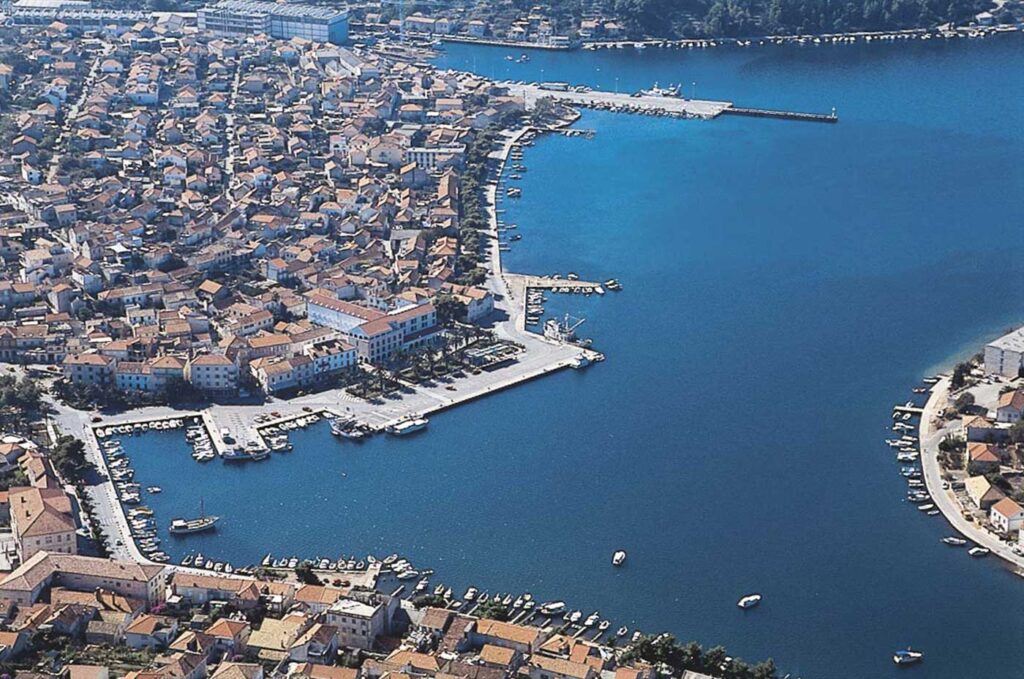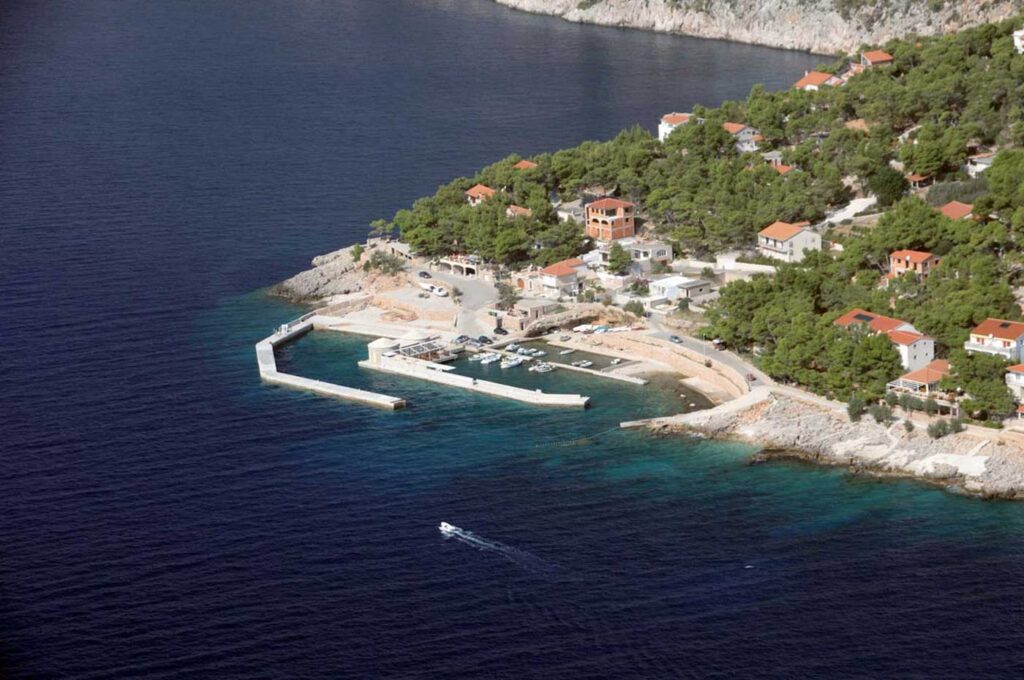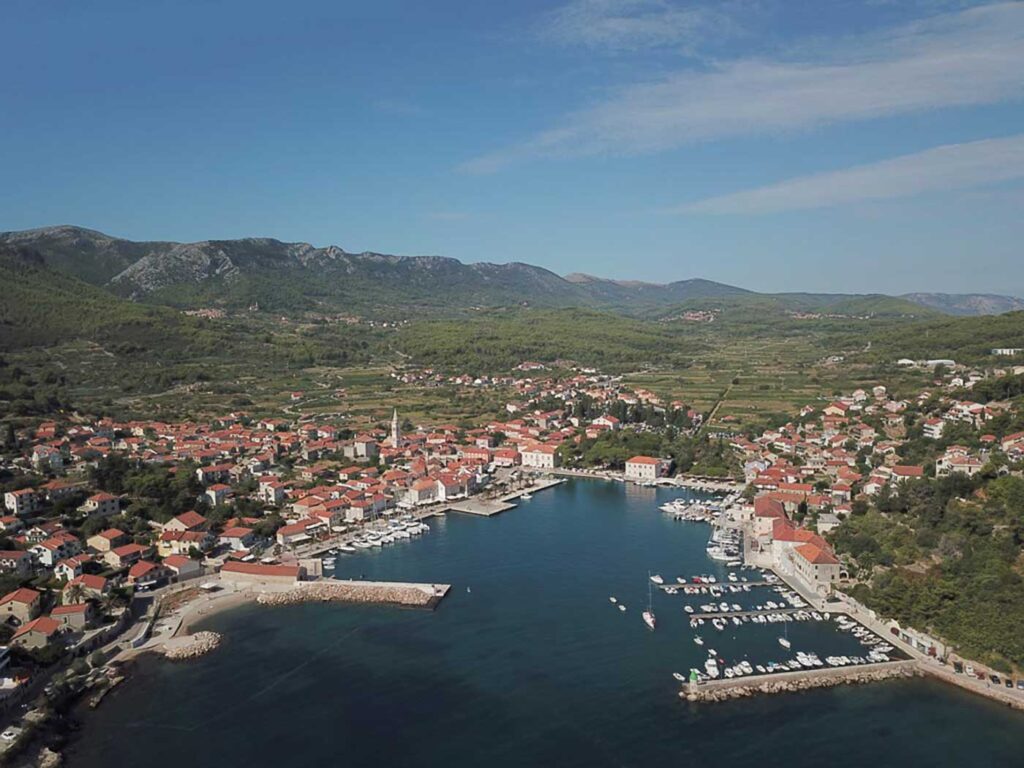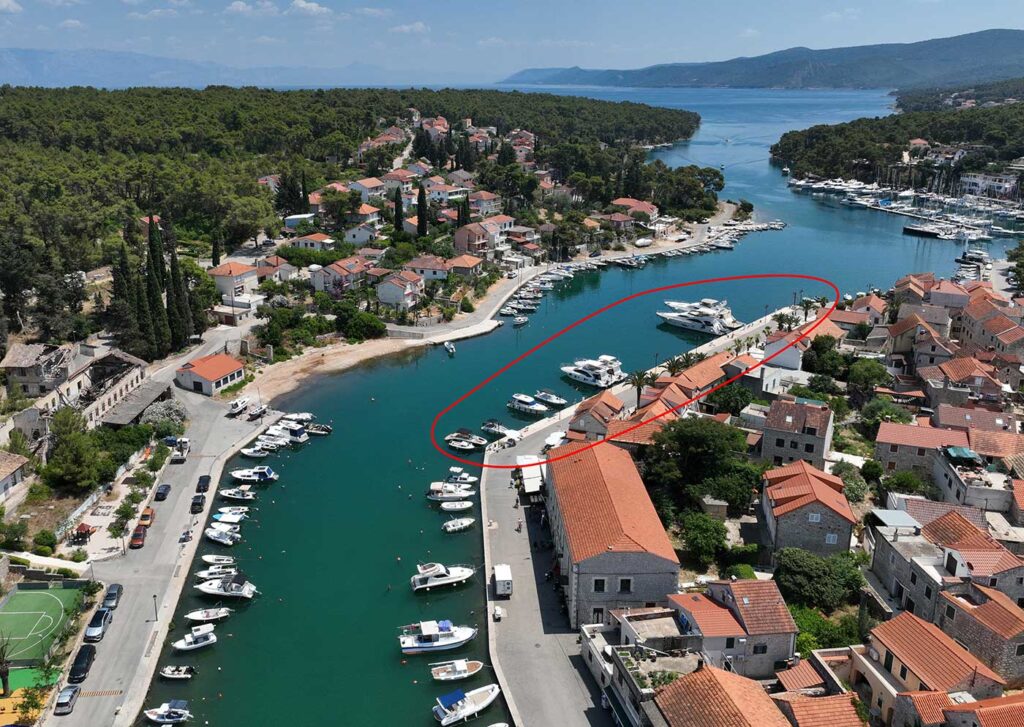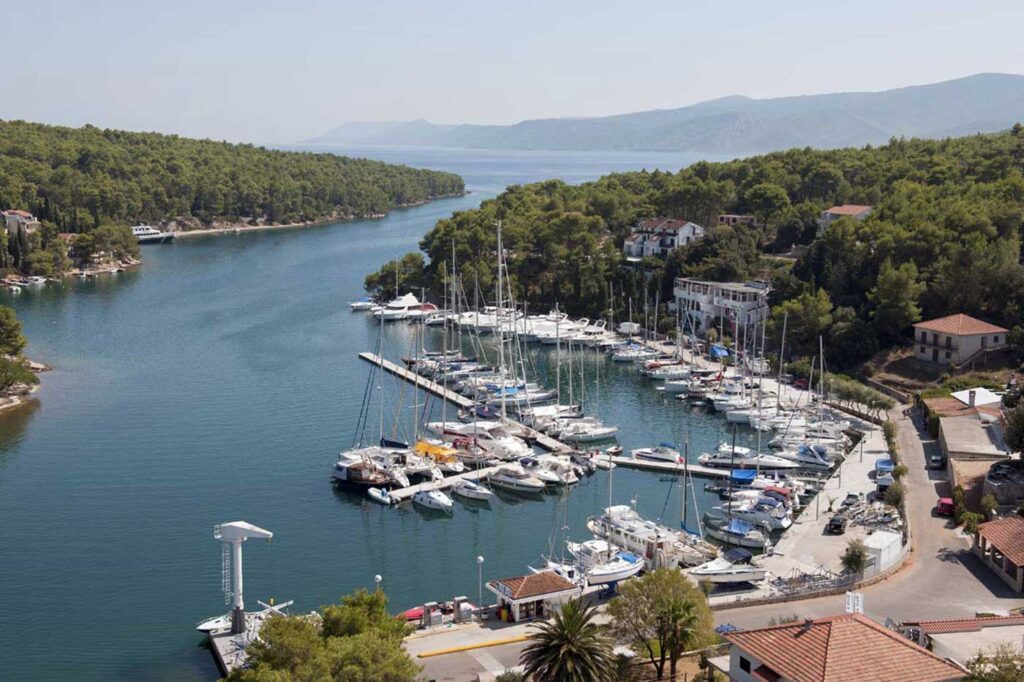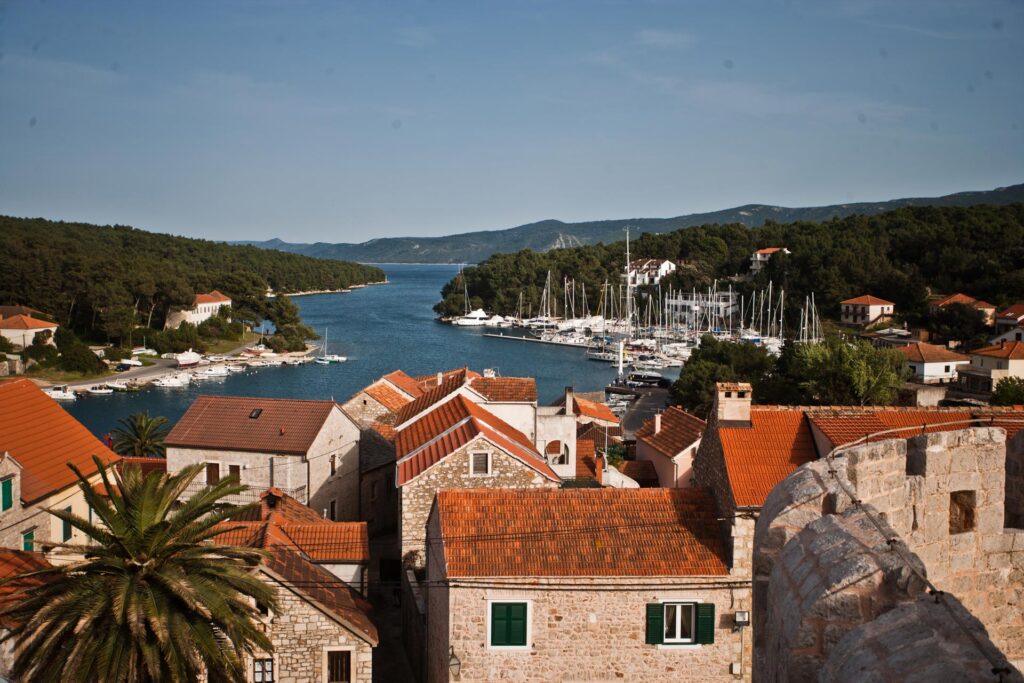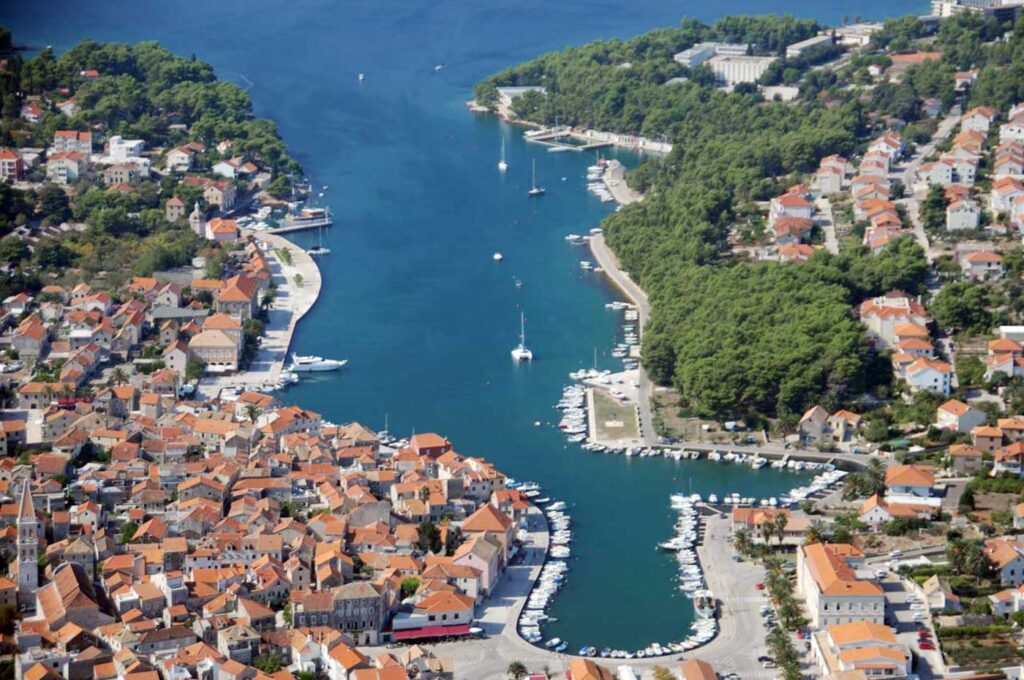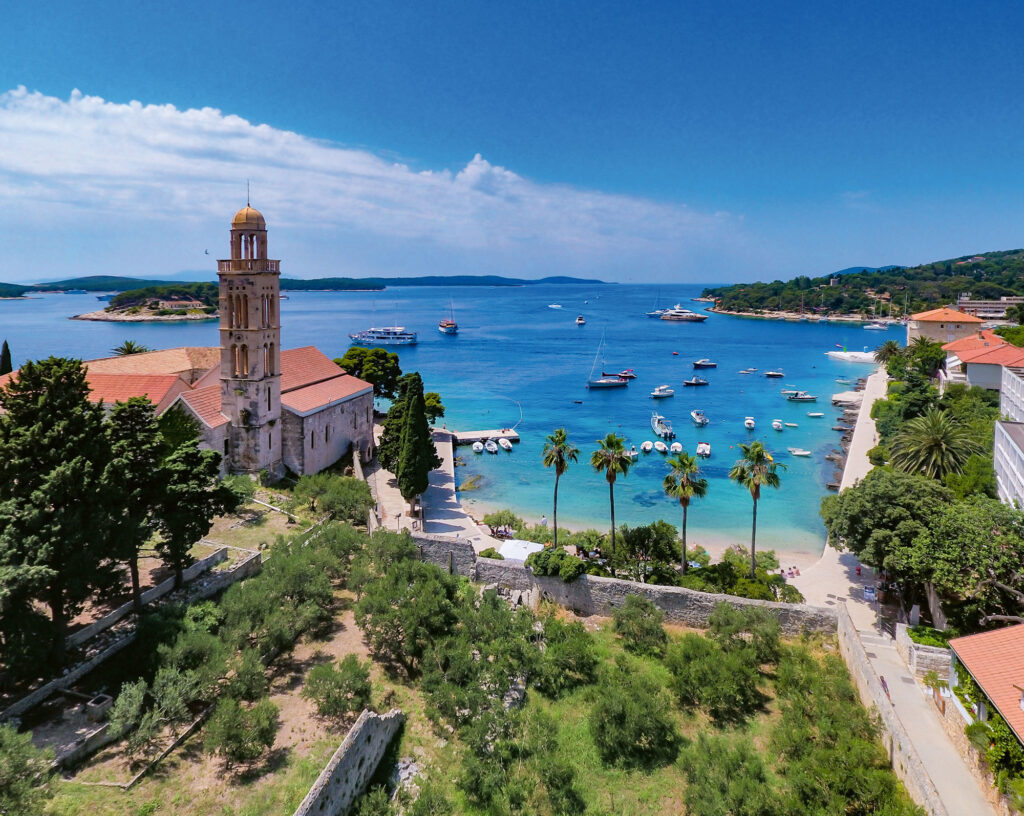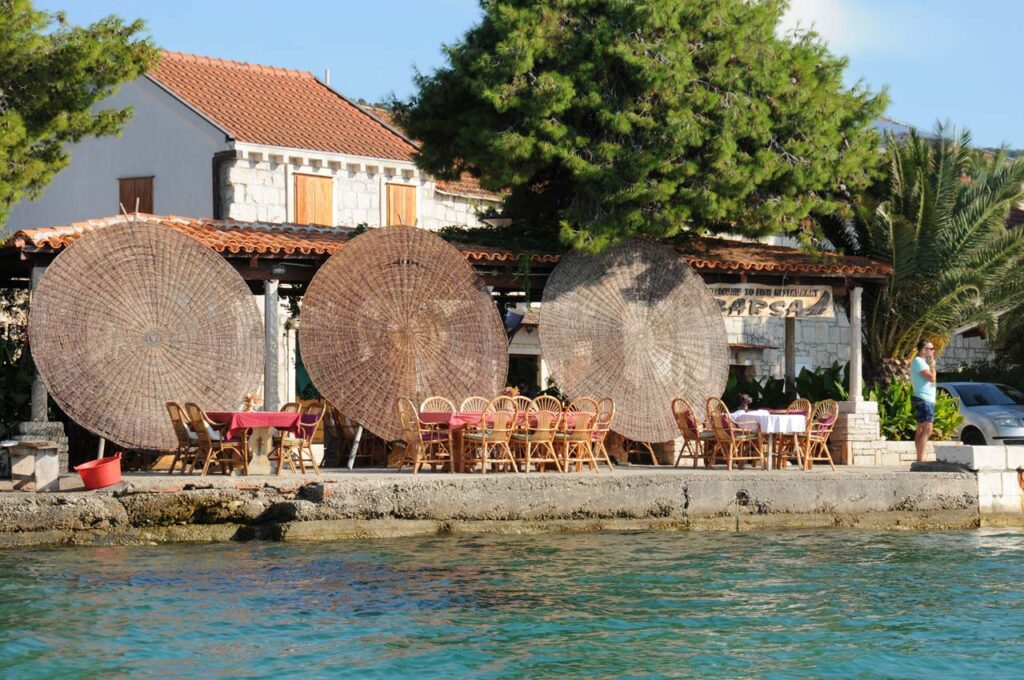

Neither near nor far, at 40 nautical miles from Split and the surrounding coast, Korčula is within easy reach of sailors and anyone chartering a boat from the local marinas. For those setting out from Dubrovnik, the distance is almost the same.
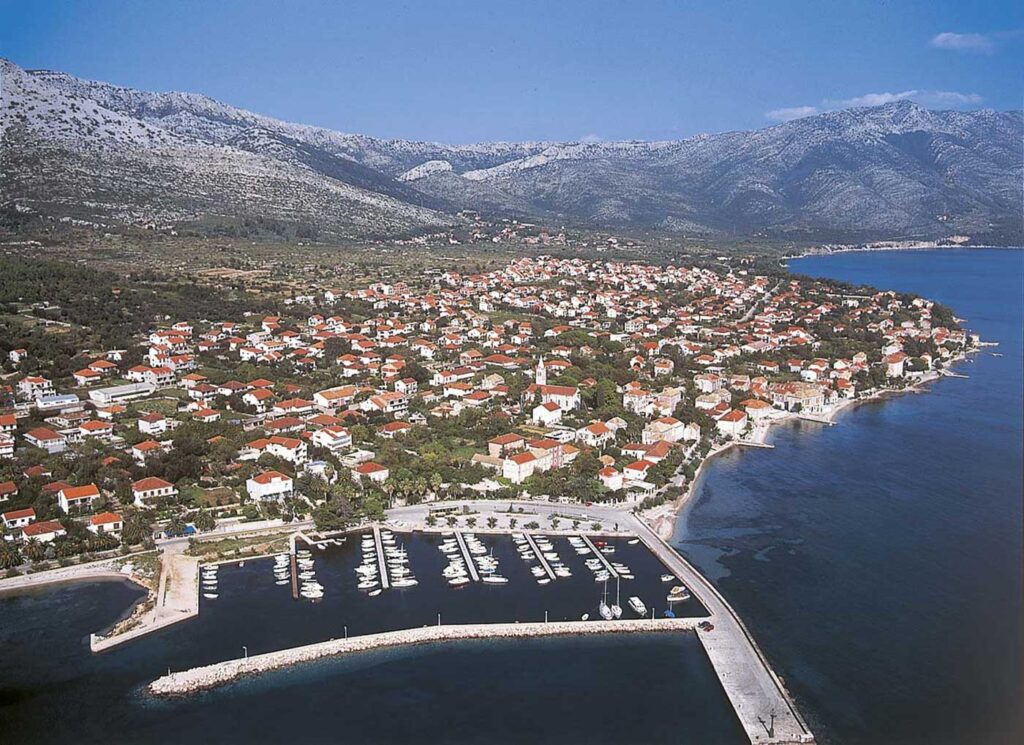
Yet those who set off on a week-long summer sailing trip spend only a day or two around the island. And Korčula deserves so much more, for its coastline is undeniably beautiful—intriguing, diverse, and wonderfully suited to sailors. The eastern shore, with a true miniature archipelago scattered before Town of Korčula and Lumbarda, offers the most rewarding cruising. Just as lovely is the Bay of Vela Luka, with Proizd and Ošjak, while the Pelješac Channel is shaped by powerful maestral, tramontana and jugo winds. Then comes the south-western coast, from Tri Luke to Brna, where those in search of solitude will find exactly what they came for. What’s more, Korčula has a lively, picturesque interior that is well worth exploring.
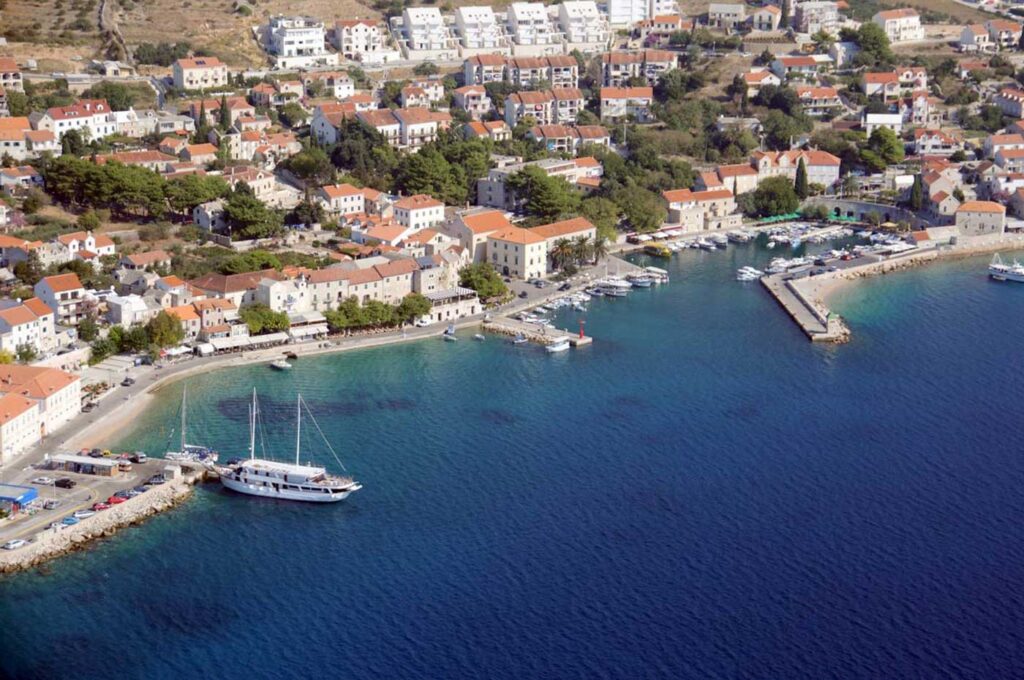
Town of Korčula
Korčula is one of the loveliest towns on the Croatian coast, and you will never tire of spending time there. Its historic quarter, set on a peninsula and enclosed by walls and towers, has an atmosphere entirely its own. Wandering through its narrow lanes, laid out in a distinctive fishbone pattern, is an experience in itself. Filled with little taverns, cafés, shops and museums, they are always buzzing with life. A visit to the cathedral and the museum opposite is a must. If you get the chance, climb the bell tower for sweeping views over the Old Town and the archipelago beyond. Beside the cathedral stands the newly refurbished Marco Polo Centre, dedicated to the great traveller whose family came from Korčula and owned the house in which the centre is located.

One More Berth
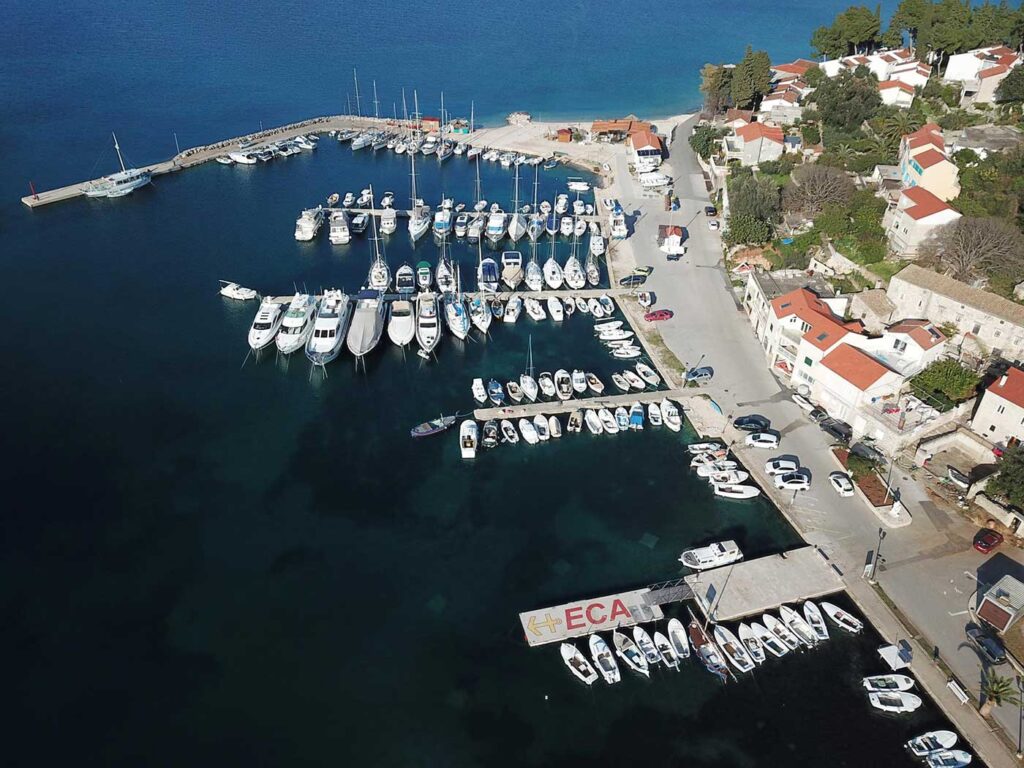
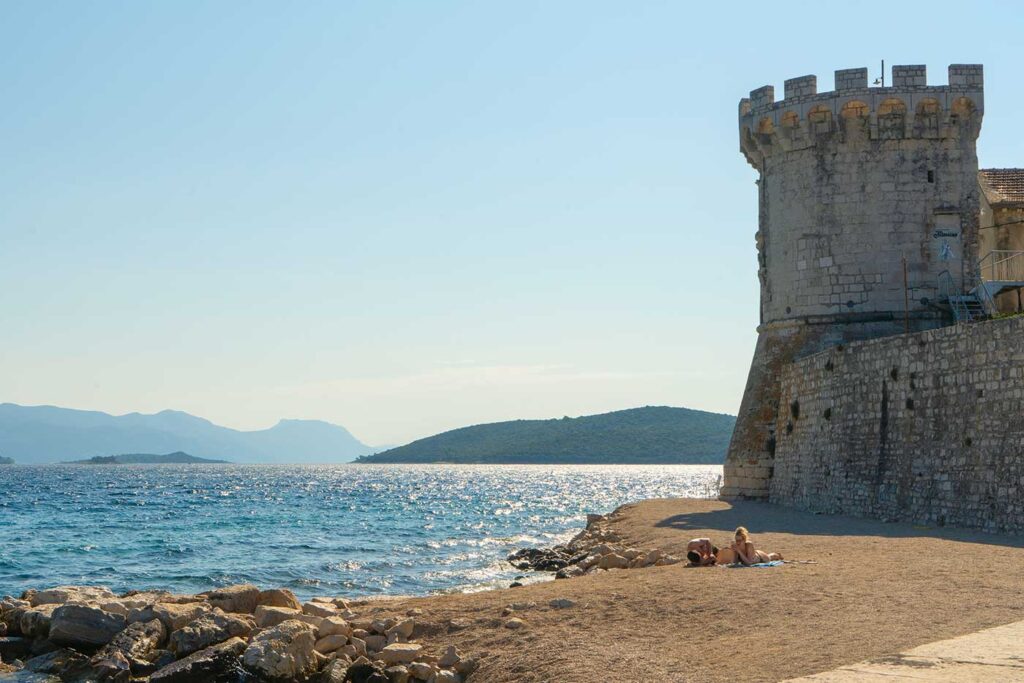
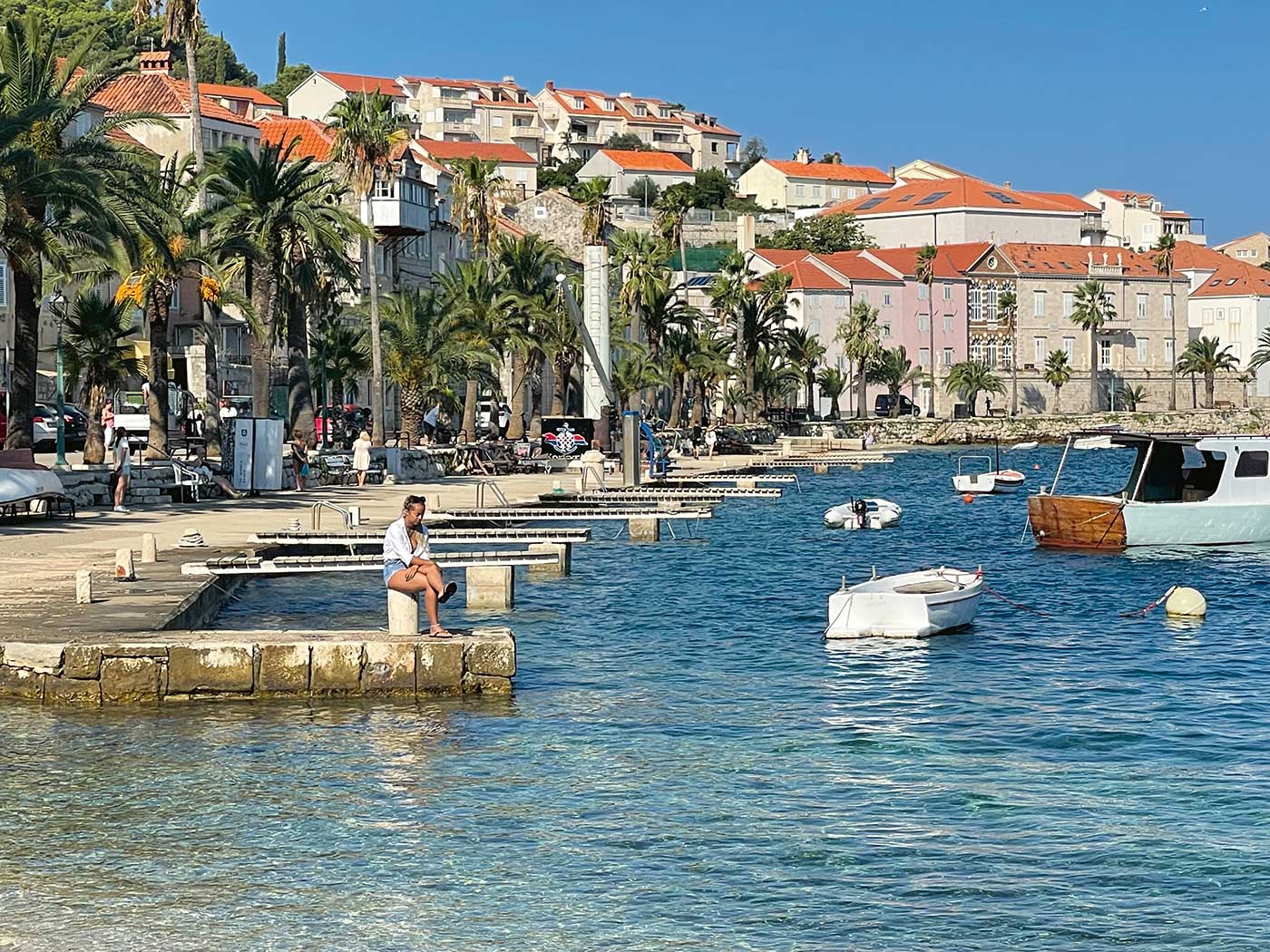
Even sailors find it hard to resist the town’s magic, and in high season its waterfronts can become quite crowded, making it difficult to find a berth. The safest option is ACI Marina. Transit berths are always in short supply, so booking and paying in advance is wise—especially on Tuesdays and Wednesdays, when charter boats sail into the port. On the outer side of the breakwater, exposed to the levant and the bura, larger yachts and the occasional gulet usually moor.
The remaining quays are occupied by mini-cruise ships, sometimes 10 or more rafted up, and large yachts on a four-point mooring. If the marina is full, the best option is to continue to Luka Bay, also known as Porto Uš, drop anchor and take a stern line ashore. The bay is well-sheltered and close to town, yet secluded. A small municipal harbour lies on its northern shore, and there may be room along its outer wall. As elsewhere around the island, the port authority charges for anchoring, even in coves without mooring buoys.

Dalmatian Feast
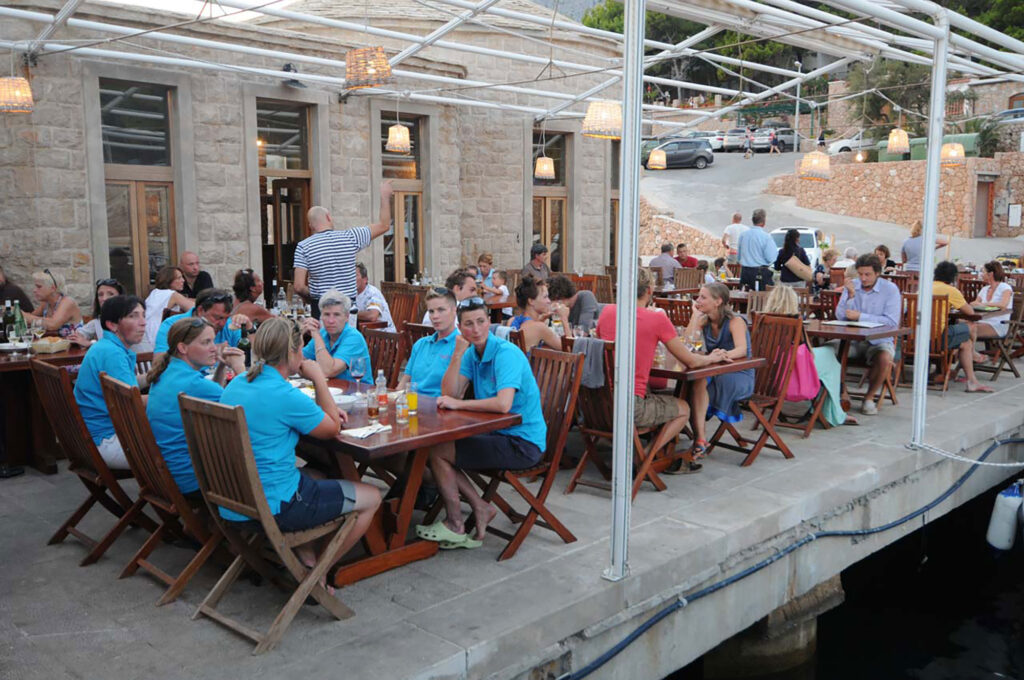
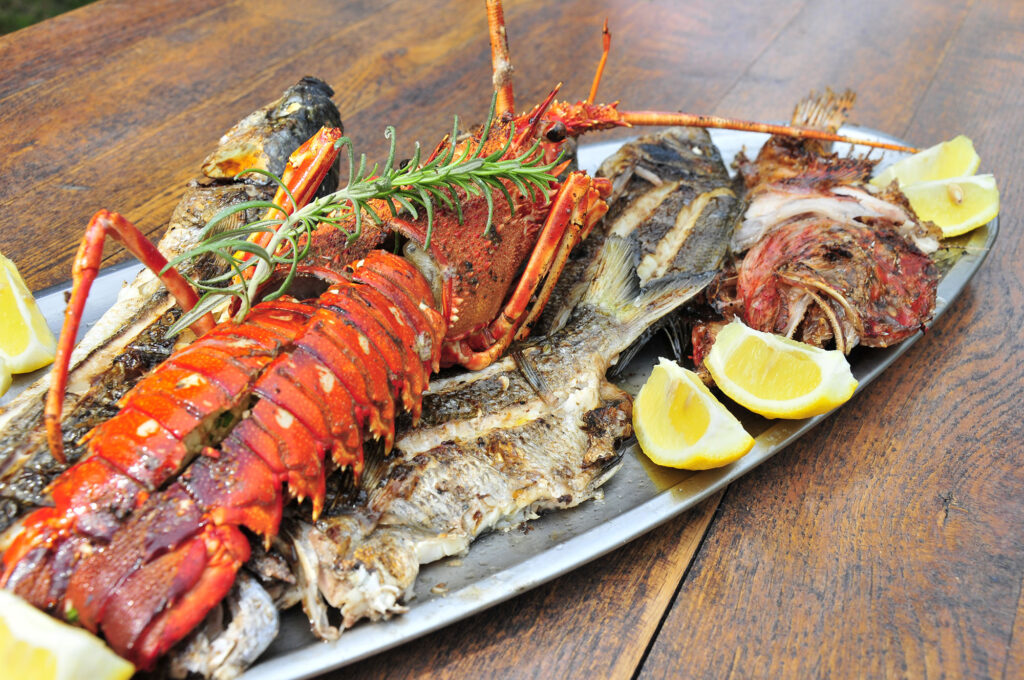
Once you have found a safe berth, the next question is how to arrange your day. Since we are on holiday, and everything seems to be measured from one meal to the next, let’s just say that the city has undergone something of a culinary renaissance in recent years. It is now packed with restaurants. Many, of course, are the usual tourist-oriented places, but an increasing number stand out from the crowd.
The change began with the opening of the luxurious boutique hotel Lešić Dimitri Palace and its restaurant, where chef Marko Gajski has set new fine dining – standards that have earned the restaurant its first Michelin star. The effect has proved beneficial, encouraging others to raise the bar and find their own distinctive voice. In a remarkably short time, Adio Mare, one of the town’s oldest restaurants, after enduring some less-than-glorious years, has found a new lease of life. Nigra has appeared on the scene, while Filippi has earned a Michelin recommendation. Each of these restaurants—and they are by no means the only ones—is a place where a meal is sure to bring you joy.
We were particularly taken with Nigra, founded, just 7 years ago where young chef Karlo Moretti interprets local ingredients in his own distinctive way, taking them in a direction that could lead to a more elevated style of cuisine. Add to that an excellent selection of wines—Nigra is also a wine bar—exemplary service and a secluded setting overlooking the town, and what more could you ask for.

Do not miss a visit to Smiljana Matijaca and her Cukarin pastry shop, tucked away in a lane some 50 metres from Plokata, the town’s main square. This is the place to sample traditional Korčula sweets: klašuni, cukarini, bombice, amaretti and harubice. A visit to Cukarin is also an opportunity to catch up on local news, for Mrs Matijaca knows it all and is always happy to share.

Dance and Culture
Recharged by the delicious energy of klašuni or cukarini, you can carry on with the rest of your day. From April to October, the Moreška sword dance is performed in memory of the island’s defence against the Algerian commander Uluç-Ali. Do not miss a performance at the open-air cinema beside the town walls. Once danced throughout the Mediterranean, Moreška is now performed only on Korčula. Then, especially if you are young—or young at heart—continue the evening at one of the town’s cocktail bars or clubs.
Vino Vitae
If you have taken our advice and stayed for several days, rent a car for a day and explore the island’s interior. Žrnovo is only 3 kilometres away, and it is well worth driving on to Pupnat and the renowned wine-growing villages of Čara and Smokvica. This part of the island will surprise you with its beauty, too: stone houses, fields covered in vineyards, excellent winemakers and, most importantly, plenty of local people.
Korčula, the most populous island in the Adriatic, has preserved life in all its settlements, largely thanks to wine. Around 30 winemakers now bottle and label their own wines, and many are well worth a visit. The island is best known as the birthplace of Pošip, for Grk grown in Lumbarda’s sandy soils and, increasingly, for Plavac Mali.
Visit Mate in Pupnat
On the way back, stop for dinner at Konoba Mate in Pupnat where booking well in advance is essential. It is worth visiting for the atmosphere, the warm welcome and, above all, the superb traditional food, often prepared with a spark of imagination. Mate and Mirjana Farac founded the konoba at the beginning of the millennium to make the most of everything grown and raised on their farm. Word quickly spread, the menu expanded to include the catch of local fishermen, and their children are gradually taking over the business, particularly their daughter Biljana, while their son Matija has devoted himself to the M.a.t.e. beach bar in Pupnatska Luka. Their work has earned them a Michelin Green Star for sustainable and ethical practices, as well as a Bib Gourmand for excellent value.

Stupe and Badija
Once you have had your fill of the town, at least 3 more places await by sea. The lagoon enclosed by Vele Stupe, Male Stupe, Majsan and several reefs is among the loveliest in the Adriatic. Small boats and shallow-draught sailing yachts can enter, while deeper-draught vessels can anchor to the west of Majsan. The owners of the restaurant and beach bar on Stupe have laid a dozen mooring buoys, making it possible to stay overnight—provided you do not mind the loud music drifting across from the islet.
The best-known swimming anchorage lies off the southern shore of Badija, an island famed for its Franciscan monastery. Take the opportunity to walk around the island and step inside the Church of Our Lady of Mercy and the Chapel of the Holy Cross. They still breathe the peace of the late 14th century, when the Friars Minor began building here. Badija, the islet of Planjak and the Baretica reef enclose a sandy lagoon 4–5 metres deep, filled with crystal-clear turquoise water. It is a popular swimming spot, crowded by day with yachts and small boats whose crews generally return to Korčula as evening approaches.
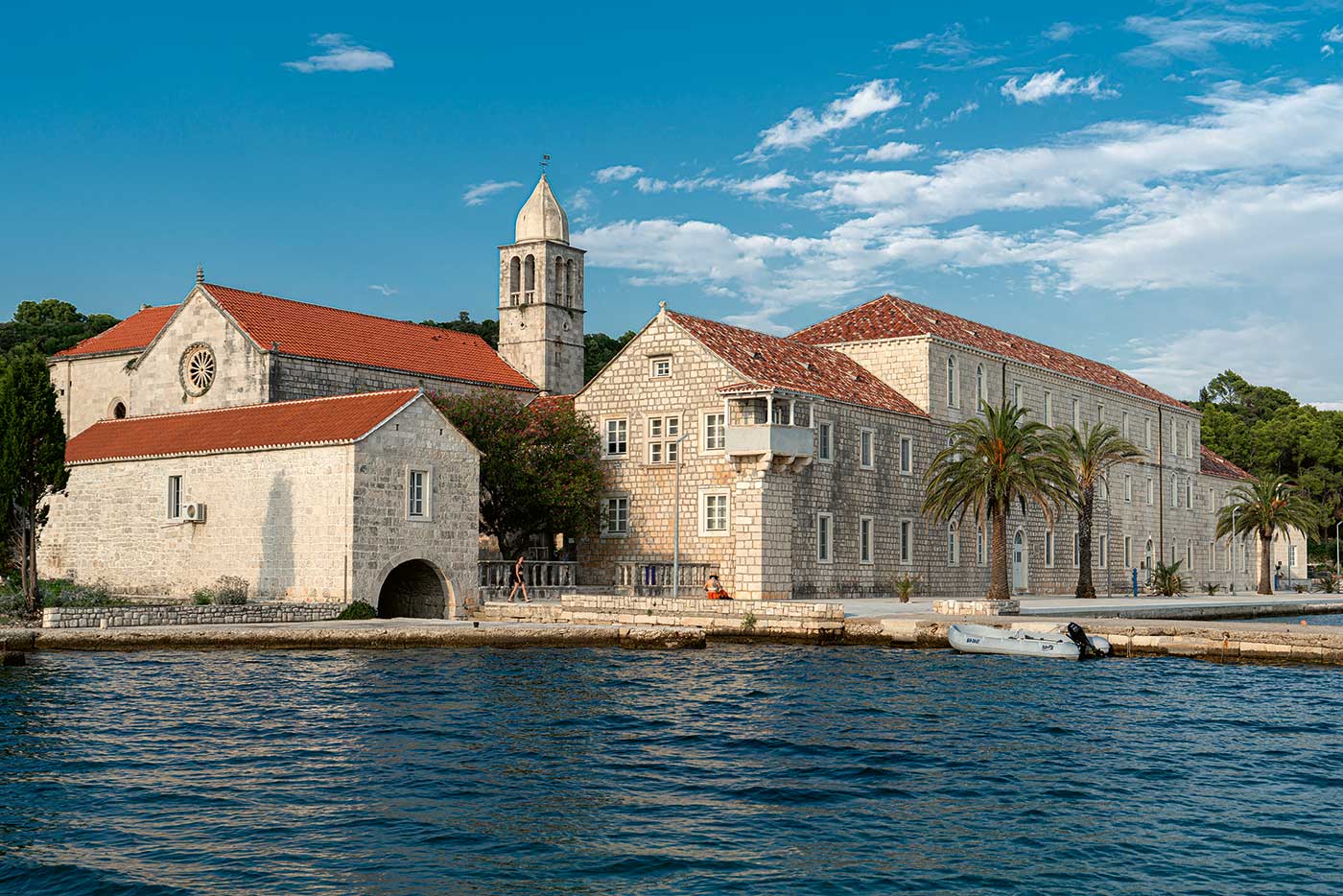
Vrnik
Less then a nautical mile south of the lagoon lies Vrnik. After Badija, it is the largest of the islets scattered along the eastern coast of the island. Numerous passages separate them, and there are also shallows and reefs. Vrnik is worth visiting for the atmosphere of its long-silent quarries, the stonecutters’ hearths and its shore of perfectly white pebbles, formed from fragments of stone waste tumbled smooth by the sea.
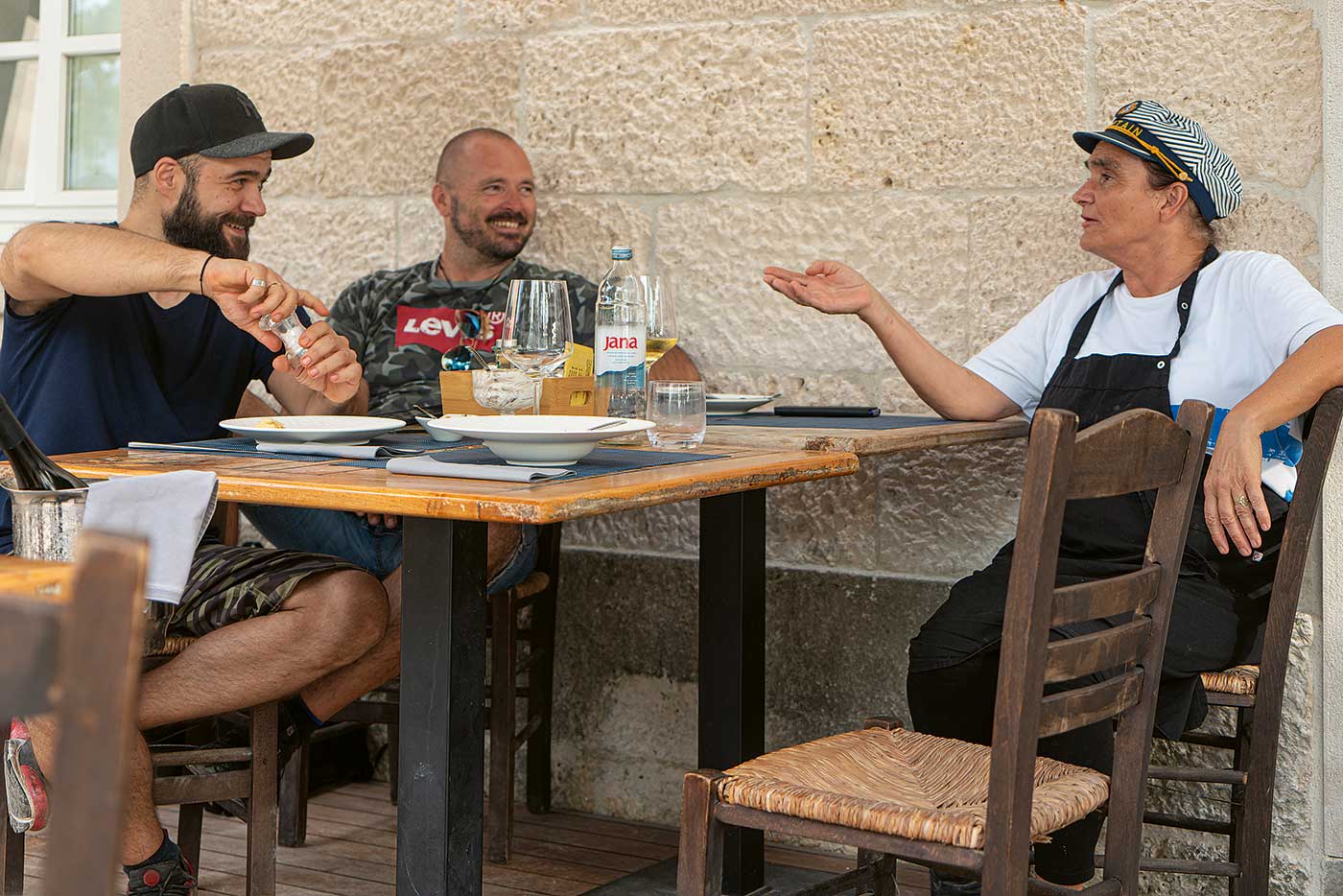
Another compelling reason to visit is lunch, or simply a drink, at Pero Lozica’s Vrnik Arts Club. Housed in the former village school, which closed in the 1950s, the club features a small restaurant and lounge bar, as well as several guest rooms. One classroom has been preserved with its original period furniture, while the other now hosts exhibitions.
He invited accomplished chef Darko Vlašić and local cook Neda Karapandža to join him, and together they created an inspired menu and a style of cooking that gives traditional dishes and ingredients a personal, contemporary touch. They prepare fresh fish, knead their own dough, make risottos and bake bread; meat lovers can also order dry-aged steaks or lešada, traditional Dalmatian boiled meat dishes.

Four mooring buoys are available below Vrnik, or, more precisely, off neighbouring Kamenjak. If you don’t feel like sailing out to the islets and return to the marina, you can always rely on the local barkajoli—boatmen who carry passengers from the quay opposite the marina. The restaurants on Stupe and Vrnik also arrange transfers for their guests.
Lumbarda
Another large and picturesque settlement lies on Korčula’s eastern shore. Lumbarda is known for eminent Croatian sculptors, generations of master stonemasons and the celebrated, heady white wine Grk. It is surrounded by fields and vineyards. You can berth here and remain for a day or two, enjoying the village’s tranquillity. Its marina is small but newly refurbished and can accommodate vessels up to 30 metres in length. If no berth is available, you can anchor in Lumbarajsko Račišće Bay. If you are looking for generous portions of fish and meat, take the tender to Konoba Gavuni, where you will find good food at reasonable prices.

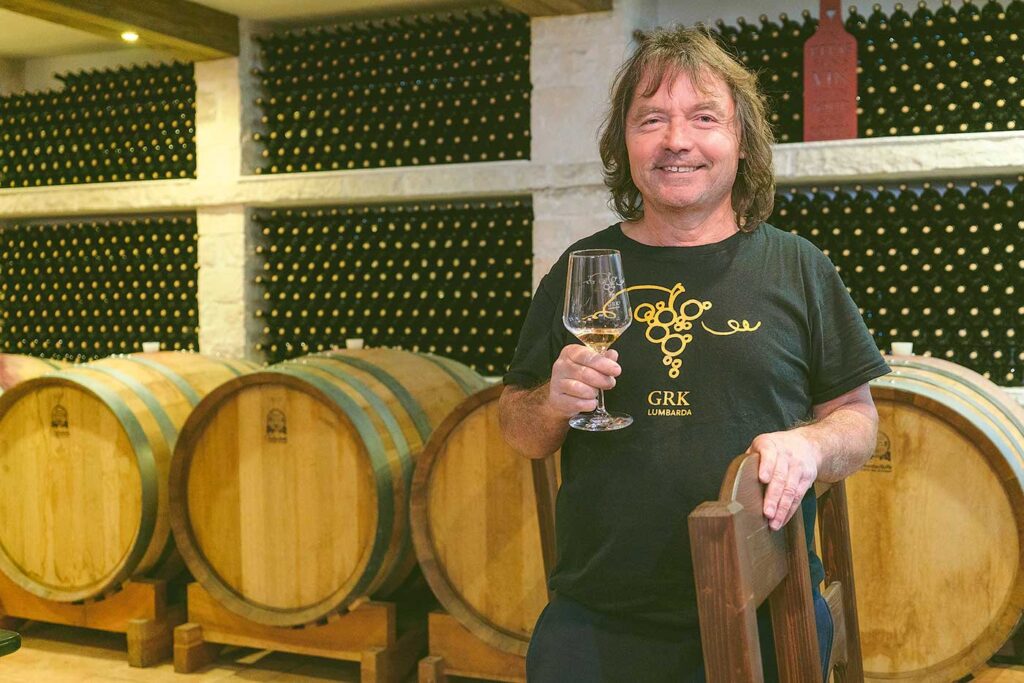
One visit that should not be missed is to the winery of Frano Milina Bire, who made his name with Grk and later with Plavac Mali. He successfully matures his wines in oak barrels and is one of the very few producers to do so with Grk. The winery itself deserves to be experienced: a beautiful contemporary space, designed with restraint and a deep respect for tradition. Many make the pilgrimage here to enjoy Grk and Plavac Mali with prosciutto, goat’s cheese and, on occasion, Korčula-style makaruni pasta or meat and vegetables cooked under the peka bell. Just as appealing is the warmth and good energy of Frano and his family. Nearby is Zure, the restaurant run by the Batistić family, where the fish has been caught by the owner himself and is served with his award-winning premium wines.

Pržina Bay, already on the island’s southern shore, also belongs to Lumbarda. It is Korčula’s best-known bathing spot, with a yellowish-red sandy beach stretching across the head of a bay open to the south-west. Sailors come here too, anchoring among the bathers and enjoying a swim. When there is no southerly or south-westerly wind, a few boats may also spend a peaceful night here, usually in the shelter of Cape Ražnjić.

The Northern Coast
Vrbovica and Kneža
Most boats pass Korčula along its northern coast, the route taken by everyone heading towards Vis, Hvar or Split. Yet few sailors, intent on reaching their destination as quickly as possible, pause in any of its coves or harbours. Most of them lie along the Pelješac Channel, 7 miles long and generally less than a mile wide, where the sea can become rough. Sailing through it leaves a vivid impression. On one side rises Pelješac, with the old captains’ villages of Kučišće and Viganj, the tiny Church of St. John high on a crag above the sea and, beneath it, Croatia’s first Zinfandel vineyards. If the maestral has sprung up, as it usually has by midday, you will find windsurfers and kitesurfers racing all around you, for this is one of their favourite places.
On the Korčula side, you first pass the vast construction site of the new ferry port at Polačište, followed by Luka Banja and Vrbovica Bay. Unfortunately, extensive construction around both bays has greatly diminished their appeal, although anchoring remains possible. Kneža is a far lovelier choice, in the small sandy lagoon behind the islets of Mala and Vela Kneža. By day it fills with small boats and yachts; when they leave at dusk, it becomes romantic once more, and you may have the anchorage almost to yourself.

Račišće
A 1.5 miles farther west lies Račišće, one of the island’s loveliest villages. Old sea captains’ houses encircle the entire bay. Small cruise ships now usually occupy the stone pier and breakwater quay, but if you manage to find a berth, or choose to anchor, you will enjoy a respite from the usual nautical and tourist crowds. The locals are still seafarers to this day and, for the most part, do not make their living from tourism.

Prigradica
Continuing west, you pass a succession of small and attractive coves, but one place should not be missed. For decades, Prigradica served as a port for loading wine, and passenger ships sailed from here as well. Those days are gone. Apart from the scheduled catamaran, an occasional yacht and a fishing boat, vessels rarely enter the harbour of this picturesque village.
A more than 100-metre-long pier with a high breakwater protects the 300-metre quay along the bay’s south-eastern shore. Boats can lie alongside the section of breakwater not used by the ferry, and there may also be room along the quay among local boats. There are no larger settlements before Vraca Passage, 8 miles away, but the coast is fretted with coves, several of which—including Tankaraca, Žukova and Prihodnja among them—offer pleasant places to pause.


The Southern Coast
Pupnatska Luka
Sailing west from Pržina along the southern coast, you enter waters entirely different from those between the town of Korčula and Lumbarda. There are no more islets along the coast, which rises higher and steeper here, and every mile or two you will come across a secluded cove. Most have lovely pebble beaches and the occasional house. On the way to Pupnatska Luka, 8 miles away, there are larger coves such as Rasohatica, Pavja Luka, Orlanduša and Bačvica. Although it is possible to anchor in them, they are not suitable for longer stays. Pupnatska Luka is the first suitable place for a longer stop.
In this cove, which extends some 500 metres inland, you will find the island’s most beautiful pebble beach. Over the past few years, this once almost deserted cove has been swamped with bathers during the day. And since that is the way things are, the usual summer businesses have sprung up—paid parking, sun loungers for rent beneath thatched parasols, and everything else that goes with them.
Yet such a beautiful cove is hard to spoil—at least until large-scale construction begins. If you anchor a little farther out, you will hardly notice the crowds on the beach. On the shore, alongside the M.a.t.e. beach bar mentioned earlier, there is also the Tavern Mijo. If you stay overnight, you can even stop there for an early meal.

Zavalatica
The next sizeable settlement is Zavalatica. Sadly, unlike most places on the island, its houses were built with little restraint or feeling for beauty, irreversibly disrupting the harmony of the old village. Zavalatica is the harbour of Čara, a wine-growing village 3 kilometres inland. The well-sheltered bay is further protected from the west by an old pier and breakwater some 40 metres long, where a berth can be found. This is the perfect opportunity to visit Luka Krajančić’s winery, only a few hundred metres away. Those eager to stretch their legs can continue on to Čara and the Nerica winery, owned by Jakša Krajančić.

Brna
Brna is the largest harbour on the island’s entire southern coast, though it receives relatively few visiting yachts. It consists of 2 bays. Istruga, sheltered from all winds has no has no proper moorings. Brna offers considerably more options for berthing and anchoring. Boats can berth alongside the quay or at the end of the pier, while anchoring is possible in the centre of the bay. There is little in the village by way of attractions, apart from the charming Konoba Mali Jakov. A good road connects Brna with Smokvica, 3.5 kilometres inland. Brna serves as the harbour for the other wine-growing village, where visitors generally call at one of several wineries, the best known being Toreta.
West of Brna, a string of islets stretches along the coast, adding to its appeal and offering the chance to anchor in the shelter of one of them and stop for a swim, especially when the summer maestral is blowing. Crklica, Sridnjak and Vrhovnjak are particularly beautiful spots for this. On the opposite shore are several settlements, sadly and irreversibly ruined by massive overdevelopment. This is especially true of Prižba, once a small settlement set in a beautiful natural setting, of which virtually nothing remains.
Two Pržnjaks and Three Bays
So, sail on through Luka Karbuni to the little lagoon between Veli and Mali Pržnjak, one of those places that make life and sailing worthwhile. Spend the day swimming here, and if the weather is settled, you can even spend the night at anchor.

The last, and somehow the most charming, stretch of this side of the island is Tri Luke (Three Bays). You can stay overnight here, as all three coves offer excellent shelter from westerly winds and the bura, while the islands of Trstenik, Pržnjak Mali and Veli, and Lukovac protect them from the strong jugo.
This was once an almost deserted stretch of coast, with houses only in the easternmost cove. Later, holiday homes and villas were built in the other two as well. In the westernmost part, among the rocks of Cape Ključ, you can enjoy the peace and quiet and go for a swim, usually with just a few boats for company.

Proizd and Vela Luka
We have finally reached the deep bay of Vela Luka, with its anchorages, marinas and berths along the waterfront. But when the summer maestral is blowing, make sure to visit Proizd as well. The best way to enjoy it is to anchor in one of the small coves on the northern side of the island and stretch out on the beaches of large, gleaming white pebbles or on the smooth stone slabs that surround them and for which the island is famous. Perhaps the most inviting is the easternmost cove, Batali, where locals come by boat to spend the day swimming, relaxing and enjoying themselves. After a day spent there, Vela Luka is a perfect place to spend the night.

It takes a full 4 miles of sailing to reach its waterfront. The coast of the bay is deeply indented, and two toponyms are of particular significance to sailors entering it. The first is Gradina Bay, sheltered by the islets of Sv. Ivan, and Gubeša, which holds a managed anchorage. The other is the famous, much-sung-about island of Ošjak, covered in forest and situated roughly in the middle of the bay. There is no pier there, however, except for excursion boats and local vessels, so if you wish to stay, you will have to anchor in its lee.

Ever since Marina Korkyra was built, Vela Luka has become even more attractive to sailors. Modest in size with around 130 berths, the marina features a lovely restaurant and is kept impeccably tidy. Finding a berth here is often easier than at the town waterfront, which is mostly occupied by excursion boats and local barkarijoli, or at the ten or so mooring buoys in the Kale inlet.

Vela Luka may not have a Renaissance core, but it is a wondeful place to visit. During the sailing season, it is a vibrant town with a cheerful atmosphere, plenty of cafes, and a long waterfront that is perfect for a stroll. While finding a truly good lunch spot can be a bit challenging, the marina restaurant and Konoba Bata are well worth a recommendation. Additionally, the local museum, which displays a plethora of valuable sculptures, is definitely worth a visit.

Few are unaware that the residents of Vela Luka have a God-given musical ear and voice like no one else. So, singing and music can be heard on every corner, and ‘Sjećanje na Velu Luku’ (Memory of Vela Luka) by Branko Žuvela is one of the most popular songs ever dedicated to a single town.
Blato, which is only about 4 kilometers away, is well worth a visit while staying in Vela Luka. Often described as the largest inland settlement on the Adriatic islands, it is situated on the edge of the fertile Blatsko polje (Blato field). Even though its residents were historically farmers, Blato is far from a simple village. It is actually a charming small town whose narrow streets, magnificent linden tree avenue, lush park, parish church with a tall bell tower, and a spacious square with a historic loggia give it a distinctly urban character.
Written by Braslav Karlić
Photography by Mladen Šćerbe, Marin Srzić