Vis lies anchored at a point from which the entire Adriatic seems within reach. Neither large nor small, it is an island steeped in history. The Hellenes founded a town here, with defensive walls, houses arranged along a grid of streets, a waterfront and a necropolis; the indomitable Illyrians also left their mark. The Romans gave it a theatre and thermal baths, while Croats have inhabited the island since the 10th century. Several centuries later, Renaissance country palaces rose here, followed in the 19th century by civic buildings and institutions.
Vis occupies a strategic position along ancient trade routes and has witnessed naval battles that determined who would command these waters. It is an island of townspeople, fishermen and farmers, and, above all, of a character found nowhere else. You sense it in Vis, spread around the harbour of St George, and in Komiža, huddled at the head of its bay. You find it, too, in the inland fields, once blanketed with vines that left room only for villages scattered along their edges.

The island offers much to those who arrive in their own boat. Give it the time it deserves: at least 10 days to experience even a portion of its 54 bays and coves.
Towards Vis
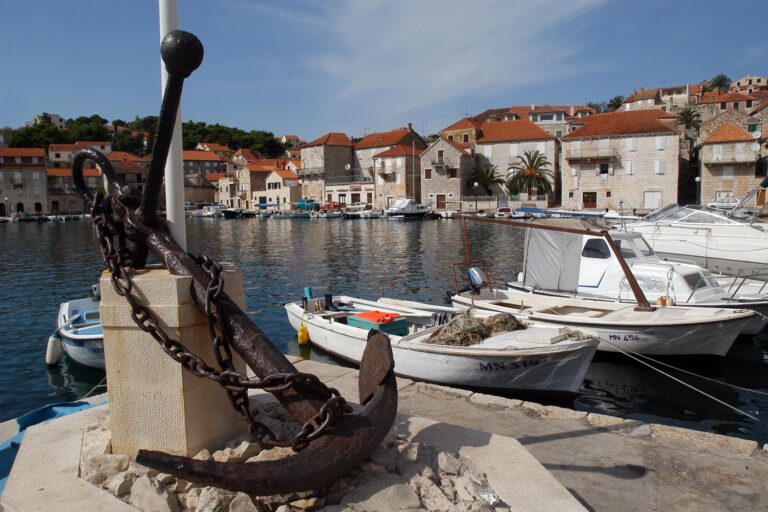
As you sail towards Vis, the first thing you see is Stončica lighthouse, growing inexorably larger ahead. You pass Krava Rock, leave Host to starboard and enter Vis Harbour. There is plenty of room along the quays, and once all the berths have been taken, some 70 mooring buoys provide a welcome alternative. Although the island’s quays are administered by the County Port Authority, those in Vis are looked after by local people from Gradina.
You can also berth at Kut, where sanitary facilities for seamen have been installed in the reception building. Attractively designed and spacious, they are more than adequate for the 40 or so boats that can now fit into Kut following the extension of the quay.

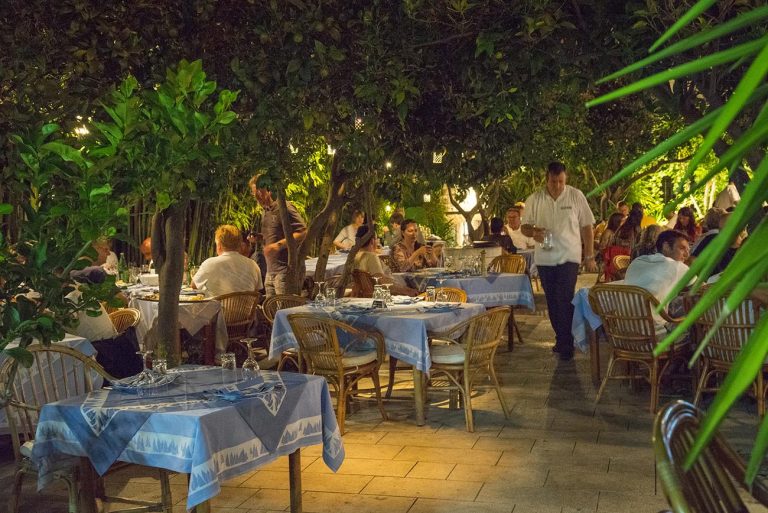
People do not berth here for the waterfront alone, but also for the excellent restaurants. We try to count how many there are in this part of town: Vatrica, Val 2, Pojoda and Kaliopa. In the socialist era, there was only Lambik, and the best thing on its menu was a slice of grilled amberjack. By God, we have come a long way. Today, the restaurants of Kut can seat 500 people. Three of them serve outstanding food. We shall refrain from drawing up our own ranking because, for us, Pojoda stands above them all: because of our friendship, once with Zoran and today with Marko and Vesna, and because they have managed to keep their cooking at the very highest level.

A Walk Through Town
A walk through Vis is more than a stroll from the Czech Villa to Stonca. It is also a journey through the town’s past: from the demolished villa built by the shipowner Topić, whose planned reconstruction should transform it into a hotel, to the cemetery of British sailors killed in the first Battle of Vis in 1805; from the fishermen’s quarter of Lučica and the Renaissance palaces of Kut to Batarija, Kalafotovo, the patrician quarter of Luka, the excavated remains of ancient Issa and Prirovo.

Do not miss the Vis Heritage Museum in the Gospina Batarija fortress, with its underwater archaeological collection and the many other historical treasures preserved within its walls.
When we emerged from a narrow stone alley onto Kalafotovo, the Vis waterfront spread out before us, more beautiful than ever and paved in white stone. The quay has been widened by around half a metre with the construction of a new wall below and above the waterline, while all its infrastructure and equipment have been replaced. Several restaurants now line this stretch as well.

The Beauty of the Bays of Vis
The following day, we set sail for Komiža along the island’s eastern and southern shores, passing a succession of beautiful bays and coves. The first is Stončica. But before reaching it, we leave Stenjalo and Dobra Luka to starboard, both excellent shelters from southerly and westerly winds. As we pass them, Cape Stračine appears ahead. Together with Cape Stončica, crowned by one of the loveliest lighthouses in the Adriatic, it encloses a deep inlet.

Within it are 3 coves and a handful of harmonious old houses. The inlet reaches a full 7 cables into the land, and several mooring buoys have been laid in Stončica. Crews linger here, splashing in the shallows off the sandy beach or settling down to eat at Stončica, run by the Linčir brothers and considered one of the island’s better restaurants. The family owns a purse seiner, while local fishermen catch prized white fish for them around the nearby rocks and islets, so there is never any shortage. They are known for an excellent peka, as well as meat cooked over the grill or on the spit, but they also serve fine traditional dishes such as dropčići, known on the island as Vis-style kulen.

The Eastern Coast
Cape Stončica marks the end of the island’s northern coast and the beginning of its eastern shore. Immediately beside the cape lie the coves of Mala and Vela Smokova. Uninhabited and reaching some 500 metres inland, they are exposed to the levant and become rough in a jugo, although they offer shelter from westerly and north-westerly winds. Even so, they are not particularly popular with seamen.
The coast remains largely unbroken as far as Milna, one mile and seven cables away. For those of us approaching by sea, however, the real attraction is the chain of islands, islets and rocks running parallel to the shore: Greben, Veli and Mali Paržanj, the rocks of Pupak, Žuberka and Pločica, followed by Budihovac, or Budikovac – Veli and Mali, and Ravnik. They form a 3-mile-long procession extending as far as Cape Polivalo, where the southern coast of Vis begins.
Turn towards the lagoon of Budihovac, directly opposite Zaglav, another lovely sandy beach in a small bay sheltered from the maestral. The islet seems to have emerged from a dream. On one side lies a white shingle beach; on the other, Mali Budihovac and Sanak Rock. The sea is clear and transparent, and the lagoon they enclose is seldom without a scattering of small boats and yachts filled with swimmers.


From Budihovac to Komiža
We continue past Ravnik and its Green Cave, where an entrance fee is charged in summer, and then past Rukavac. Luka Rukavac was once a small fishing village, but the many holiday homes and villas built around it have cost it some of its former charm. There are 3 restaurants in Rukavac. The best is Dalmatino, close to the little pier. It is run by Sandro Karuza, who also prepares traditional Vis dishes: savoury pogača, sardines grilled on a spit, salted fish and more.
The harbour itself is the largest and best protected on this part of the coast. It has two arms divided by a small peninsula, with a pier some 15 metres long at its tip. Cape Polivalo protects its western arm well from the summer maestral, while Ravnik and Budihovac offer some shelter from the south and east, although less effectively. The restaurant owners have laid several mooring buoys for visiting yachts. Make time, too, for Srebrena, the most beautiful beach on the island.
We pass Vela and Mala Travna. In the latter, Senko Karuza, a cook, winegrower and writer runs a small konoba. We then anchor briefly outside Stiniva and peer into the cove from the tender, once again reminding ourselves of its extraordinary beauty, diminished only by the crowds of day-trippers who feel they simply must see it and fill it throughout the day.


We sail on to Komiža without stopping, casting no more than a glance at a few small coves and the high cliffs where albatrosses nest.
A Day Devoted to Komiža
You can berth along the breakwater, while around 50 mooring buoys have been laid to its north and south. Dalmatia’s most beautiful fishing town nestles in the corner of the bay beneath Mustera and the almost 600-metre-high Mount Hum. This truly is one of the Adriatic’s most remarkable corners.

The Komiža waterfront is not large, yet nowhere else, perhaps, do fishermen pulse so vividly through the life of a town, nor is their tradition felt as strongly as it is here.
Morning is the ideal time to visit Mustera, the fortified Church of St Nicholas on the hill overlooking the bay, before descending to the Komuna fortress on the waterfront, which houses the Fishermen’s Museum. Its exhibits include old fishing equipment and Cicibela, the last surviving authentic Komiža gajeta falkuša. Fortunately, 2 newly built examples of this traditional fishing boat lie in the harbour today.


We spend the afternoon at anchor in Barjaška Bay, then return to our berth.
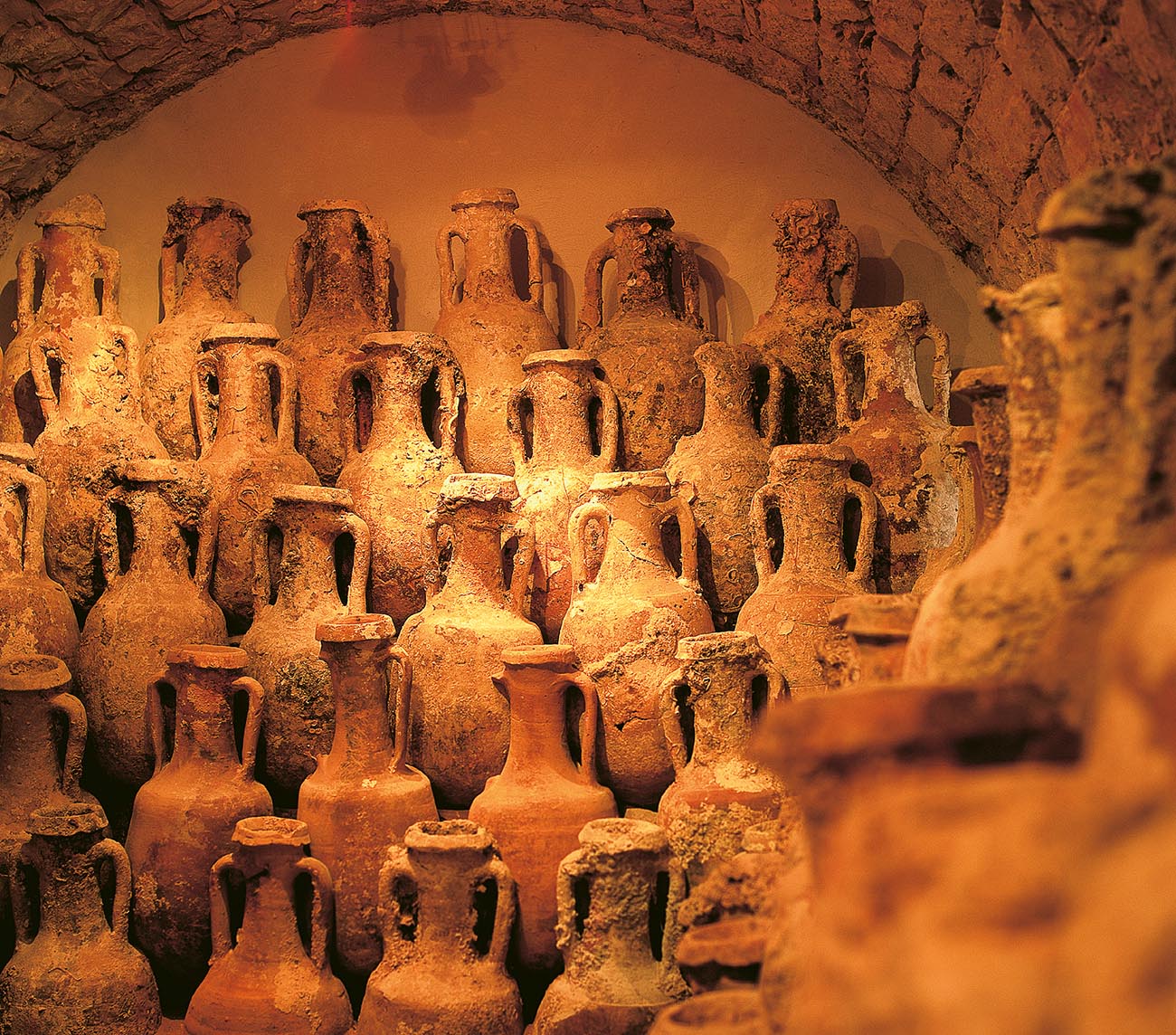
The evening is reserved for dinner at Bako, the Borčić family’s restaurant, which offers one of the loveliest views of Komiža. The fish is always good, while the konoba is decorated with numerous pieces of underwater archaeology collected by the celebrated diver and coral fisherman Tonko Borčić.

Komiža is also the departure point for visits to the Blue Cave on the island of Biševo. Because of the sheer number of people wishing to see it, access to the cave is permitted only aboard boats operated by the Nautical Centre, departing from Mezoporat.
An Excursion to Biševo
All excursion boats, yachts and sailing boats land at Mezoporat or use its mooring buoys free of charge for up to 2 hours. The waterfront has been equipped with all the infrastructure required to receive visitors, with berthing space for around 10 vessels. There is a souvenir shop and a very attractive modular building serving food and drinks.
A biological wastewater-treatment plant has also been built, together with new sanitary facilities accessible to people with disabilities, while the anchorage now has 18 mooring buoys. If time allows, walk to Polje, the village in the centre of the island, and visit its interpretation centre.
The Bura Coast
We set out along the island’s northern shore, heading back towards Vis. Leaving Komiža Bay, you pass the coves of Perna, Barjaška and Knezice, each with a beautiful shingle beach. Once around Cape Barjaci, with the islets of Veliki and Mali Barjak beside it, you emerge onto the barren, rugged coast exposed to the bura. Sailing here becomes dangerous when the wind rises.
Oključna and Tiha remind us that even this shore has charms of its own. Rogačić, a harbour immediately before the entrance to Vis, is an ideal place to stop for a swim.


Vis Again
This time we berth in Luka, along the quay, then go for a drink at Lola, a restaurant and bar. The beautifully restored courtyard of an old palace is fairly busy, but terraces arranged over several levels preserve a welcome sense of privacy. Ivica Grgić and his Spanish wife, Puri Lojo, serve intriguing dishes made with local ingredients and bearing a subtle resemblance to tapas.

You can also visit Peškarija 1911, an elegantly designed bistro and wine bar run by the younger generation of the Linčir fishing family. It is a place devoted largely to the oily fish caught by the family themselves and prepared by Ivan Poduje, a spirited young chef from Vis.

Among the Pojori
On the final day of our cruise, we remain berthed in Luka and exchange the boat for a rented bicycle. We climb towards the old, and beautifully restored road connecting Vis and Komiža. It passes through vineyards and links all the settlements of the pojori, the people of the island’s interior. Roads branch from it towards every bay on the south-eastern side of Vis. It leads up to Mount Hum and reaches almost every village in the island’s heart, while numerous konobas, wineries and rural estates lie along the way.
We spend the day visiting them and tasting wine with Komiža-style pogača at Aerodrom, a charming little tavern beside the site of the Allied airfield used towards the end of the Second World War.
We also visit our friends Andrzej Kondrat and his wife Ewa at their Kula estate in the heart of Dračevo Polje. A Pole who has made Vis his home, Andrzej founded the Monissa winery and produces first-rate Bugava, or Vugava.


If you have more time, take the road towards Podstražje and Milna to visit Vislander, the island’s largest and most modern winery. It was established among old family vineyards by Marko Vojković and Damir Radica.