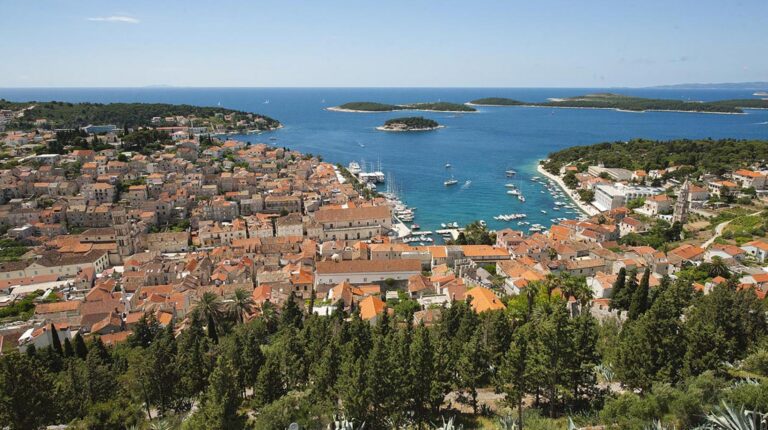
In early August, if someone were to visit all the coves of the Pakleni Islands and count the boats and yachts anchored or moored there, it would probably exceed a 1,000 in number. There is no other archipelago in the Adriatic that attracts so many boaters. Mingling with them are crowds of excursionists, bathers, people wearing swimsuits or not, partygoers, gourmands, renters of apartments and small holiday houses, divers, and adventurers in search of enjoyment.
So in the summer, the archipelago takes on the appearance of a bustling tourist anthill, surrounded by the buzz of boats of the taxi boats (in Croatian, barkarijuli), carrying passengers from Hvar to Jerolim, Stipanska, Ždrilac, or Palmižana. At first glance, the difference between these islands and other popular Adriatic beaches and coves may seem small. But only momentarily, because these are islets that belong to the small islands, basically uninhabited and far bigger than they initially seem. To get to know them better, you will have to do more, take a boat to any spot you can moor at and delve into the islet’s history, and explore the unique world that has shaped them to this day. By doing so, you will sail away with many memories, inviting you back to discover yet another aspect of this archipelago.
The lighthouse
As is customary at sea, the archipelago consisting of 21 islands, islets, and reefs is designated by two lighthouses to the east and west – on Pokonji Dol and Veli Vodnjak. Pokonji Dol, built back in 1872 during the Austro-Hungarian monarchy, is a true postcard. Located on the central ridge of a relatively small, circular island, it served as a home to lighthouse keepers and their families for over a century. When lighthouse automation made them redundant, the building where they lived, and the boathouse were rented out.
Over two decades ago, the painter Stiv Pagon moved there. He renovated the interior into a place of tranquility, contemplation, and creativity, turning it into a true Robinsonian oasis within reach of the bustle on Hvar. Now, he spends there half of the year in the company of Wu Zetian, his wire-haired Dachshund. On Pokonji Dol, only smaller boats or dinghies can moor.
Jerolim
Continuing sailing westward, you will arrive at Jerolim, named after Friar Jerolim Grivičić. He was an Augustinian religious who lived on the islet in 15th century, and intended to build there a church, buildings, and gardens with the other friars. Though he never succeeded in doing so.
Jerolim is an island where boats can anchor. Viewed from above, it resembles two (tear)drops connected by a thin strip, with white pebble beaches on the south and north sides. Both are protected by floating barriers for the safety of swimmers, meaning that anchoring is permitted only outside these areas or if you sail on a smaller boat, a convenient spot can be found near the rocks. The larger dock in the northern bay and the smaller one in the southern bay are used by the Hvar boatmen (barkarijuli) and the owners of the bistro where visitors can grab a bite to eat.
Hidden among the pine trees of the eastern (tear)drop, overlooking the southern bay, is the Mare Fio’s Kordovon Beach Bar.
Hidden Treasures
Jerolim was the first islet that captivated tourists, especially nudists, enthusiastically assisted by the barkarijuli. Today, the local boatmen depart from Hvar Port in view of the historical and grand Arsenal building (today a theater), ferrying both those who walk around the island naked and those who do so clothed and who, upon arrival, quickly make their way along a path under the canopy of pine trees toward their favorite bathing spot.
When visiting, you should take a closer look around, and if lucky, you might catch sight of the island’s unique inhabitant, the Dalmatian wall lizard (Podarcis melisellensis plutonis). The entire island is easily explored on foot, and you will always encounter someone who is equally eager to discover its wonders.
Ždrilo
Jerolim is separated from neighboring Marinkovac by the Ždrilo passage, which is some 100 meters wide and extends northward like a funnel. Just a decade ago, it was rare to see a yacht or boat anchored here during the day, whereas these days it gets crowded.
On the eastern side of Marinkovac, there are two docks where visitors to the Carpe Diem Beach Bar disembark day and night, and often up to 10 mini cruisers as well as a few yachts anchor nearby. In the late afternoon, the cruisers head back to dock at Hvar Port. It is then that partygoers from Carpe Diem replace the bathers, and the bustle and noise from the bar continue until dawn. So, if you are after a bit of peace, look for another location to spend the night.
Marinkovac
Marinkovac, the second-largest island in the Pakleni archipelago, highlights a remarkable variety of landscapes. Life has existed on the island since ancient times, possibly even earlier. The island offers a rich and diverse experience.
In its southern bay, Stipanska, where anchoring is permitted, the most famous destination for young visitors is undoubtedly the Carpe Diem sister venue, where many come not only to enjoy beach parties during the day but also for relaxation and revelry throughout the night. The island’s western coast, shielded to the west by the nearby forested islands of Planikovac and Borovac, has several passages (in Croatian, ždrila) running between them, giving the name of Ždrilca to this part of Marinkovac.
Ždrilca
This area is one of the most famous anchorages in the archipelago, often accommodating up to 50 boats and yachts. Smaller boats anchor or tie to buoys in the central, shallower area, while larger vessels usually anchor in the outer passage, securing the sterns to the shores of Marinkovac, Planikovac, or Borovac. Rarely do crews stop here without visiting one of the coastal restaurants.
Time to Eat
A pebble beach links the popular restaurants Antonio Patak, Tri grede, Mamato Bar, and the Mlini Beach in the picturesque, sandy cove. The choice is extensive, making sure that even the most discerning guests won’t leave thirsty, hungry, or without experiences worth remembering.
The family restaurant Antonio Patak was started 40 years ago by Antonio Dujmović Patak, who comes from Hvar, and visiting Ždrilca without stopping by is almost unthinkable. Long ago, the restaurant was expanded with a beach bar for those who want to enjoy drinks, swimming, or a light snack.
For those embodying a more hedonistic spirit, Tri grede is the ideal choice, the place where the restaurant business began almost 30 years ago under the three beams literally (in Croatian, tri grede) from which it got its name. In the meantime, the owner, Fabijan Brkušić, and his family have given the restaurant a contemporary appearance, but you will still be able to experience the enchanting, relaxing Mediterranean lifestyle by the sea.
Located between Antonio’s and Tri grede is the Mamato Bar, positioned in front of an old building previously inhabited by the island residents. After a few-minute walk or a boat ride, you arrive at the most beautiful and intriguing cove in the Pakleni Islands. Mlini Bay, once a favorite excursion destination for Hvar locals and now for tourists from all over.
The Mlini Beach restaurant, operated by the Dujmović-Tartaja family, offers island-grown products from their garden (vegetables, olive oil, Mediterranean herbs, and more), along with fresh seafood. They are open all day, and upon sunset, they relinquish the bay to couples who enjoy a swim.
Sveti Klement
The largest island in the Pakleni archipelago was once called scopulo magno, Veli otok, due to its size when compared to the neighboring islets. The most visited bays on the northern side of the island are Palmižana, which has an ACI marina and a restaurant, and the smaller bay of Vlaka.
On the southern side (opposite Palmižana) is the iconic Vinogradišće Bay, nearly packed with anchored sailboats every day of the season. West of this bay are the coves of Stori Stani (a variation of the Croatian, Stari stanovi or Old Dwellings), Taršće, and Soline Harbor, which are all quiet anchorages for those who are seeking genuine tranquility.
The island has been continuously inhabited since prehistoric times, as is evident by burial mounds, or tumuli – remains of the Illyrian inhabitants. The all-powerful Romans also had their subjects here, as seen in the ruins of walls and a well-preserved mosaic of the ancient villa rustica in Soline Bay on the edge of Velo Polje by the foreshore, complete with a dock, saltworks, and fishpond. Remains of Roman mosaics have also been uncovered on the edge of Momić Polje (west of Vlaka), suggesting that the area was also cultivated.
On Sveti Klement, there are several interesting, eye-catching, and soul-appealing bays, beautiful coves, capes and headlands, hidden corners and unexpected landscapes. However, a few of them stand out.
Palmižana
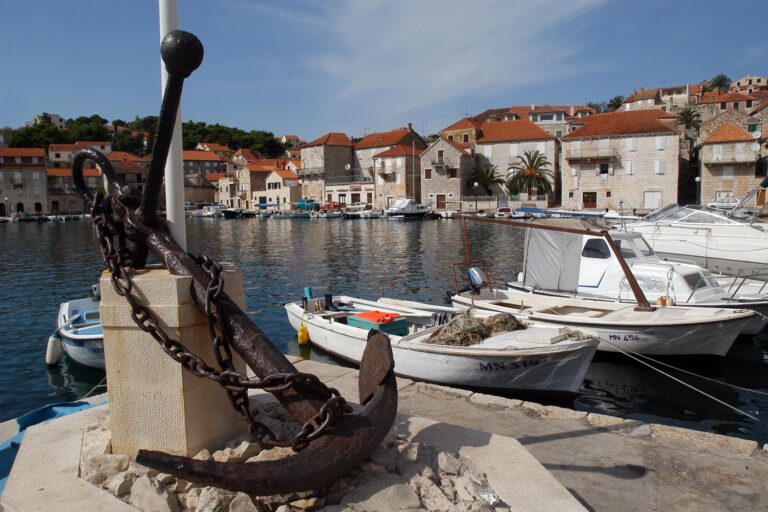
The most famous bay on the northern side is Palmižana, where the ACI marina of the same name is located, operating as the main dock for the barkarijuli. Tourists arrive at Palmižana from Hvar, eager to swim and dine at one of the many island restaurants, generally spending the day on the island, while in the evening, the boatmen carry boaters searching for a good time from the marina or nearby anchorage back to Hvar.
The Palmižana ACI Marina is stunning, possibly the most beautiful marina on the Adriatic. It operates seasonally, from April to October. Its moorings are located along the northern and western shores of the forested bay and are typically fully booked in the summer, meaning it is wise to reserve a spot online. Take a stroll along the track across the island, first climbing uphill to the land bridge between two bays to the old Meneghello Estate and then onward to Vinogradišće.
The Meneghello Estate
The walk leads through a genuine botanical garden. Professor Eugen Meneghello, a mathematician and botanist, built a small villa here in 1906 and set up the garden around it, reforesting the once barren land. He then began hosting demanding globe-trotters who came to enjoy country life. He organized sailing trips and night fishing and produced Palmižana sparkling wine for them to enjoy it in the villa’s salon.
Here, where once peace and quiet reigned, and only the occasional fishing leut or gajeta (traditional Croatian fishing boats) would stop by, dozens upon dozens of boats now sway at anchor. Over the past 100 years, the Meneghello family has turned their estate into a true paradise. Small holiday houses have been built for rent. They also run two restaurants.
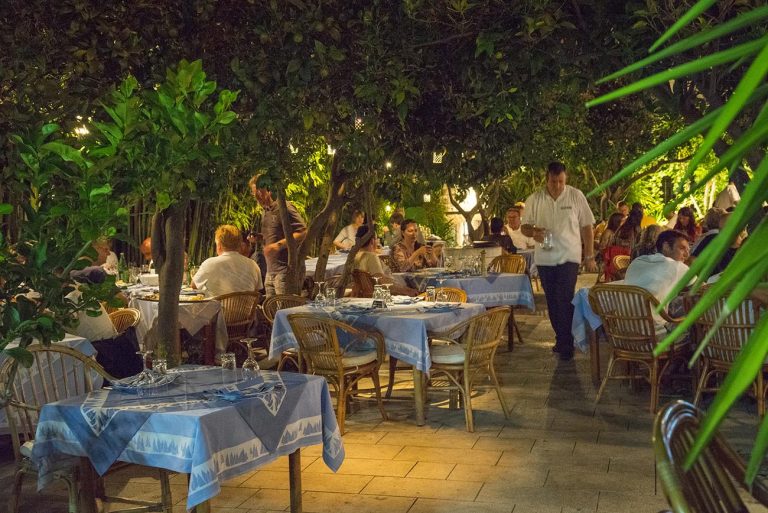
The older one bearing the family name is one of the most renowned on the Adriatic, famous for its ambiance that combines an elegant garden, salon, and gallery, as well as its cuisine. Romina Meneghello, who runs the restaurant with her husband and daughter, Alma Maria, will place on your table delicious, traditional dishes. If you get the chance, make sure you stop by and try.
Vinogradišće
Eugen Meneghello’s vision appears to be continuing through his grandson, Đenko. He is replacing the century-old pine forest, which is slowly reaching its lifespan, with olive, pomegranate, orange, bitter orange, lemon, and fig groves. The planted saplings, especially lemons and figs, come from all over the world. Indeed, this all happens in the off-season because from early spring to late autumn, Đenko runs Toto’s restaurant, located just above the beach at Vinogradišće and the anchorage, for which he has a concession.
The beautiful sandy bay is always crowded in the summer with sailboats, yachts, motorboats, and other types of boats, while the beach and surrounding rocks are mostly occupied by excursionists and young people whom the boatmen drop off at Palmižana. Over the last 40 years, about 20 houses have been built in the bay, from which several types of restaurants and guesthouses operate. Besides the two Meneghellos, there are also Zori, Bacchus, and Laganini.
The Other Side of the Island
Visitors can set out from Vinogradišće to explore the island, following a route through fields to Velo Polje and the settlement of Vlaka located above it, and then further to the western foreshore, enjoying the scent of heather and rosemary along the way. With buoys now anchored in the bay, making it much safer to leave a boat for a few hours, boaters can also make the trip on land. The farther you head toward the western part of the island, the fewer the crowds and noisy excursionists. This part of Sveti Klement, with some exceptions, has a rhythm different from the rest of the Pakleni Islands. It’s definitely worth taking a walk and experiencing it. The path toward Vlaka is marked out and easy to traverse.
Taršće and Soline Bay
Those who want to head west by boat from Vinogradišće will first pass the two points of Stari Stan Bay and then sail into Taršće, one of the most beautiful bays and an excellent anchorage. All of these bays are uninhabited and quiet, making them more suitable for genuine and experienced sailors. These places can also get crowded but everyone can find a decent part of the sea and shore. The same goes for the neighboring, spacious Soline Bay, separated by the elongated Strožica cape and encompassing the coves of Soline, Privojnica, as well as Pod lozje cove on Dobar (meaning: Good) Island.
In the shallow, western promontory of Soline, the seabed is covered in dark mud, claimed by some to have healing properties. You will also come across the remains of a Roman villa, with excavations around its base underway. If you don’t come by boat, finding a bathing spot might be difficult, as the best small beaches are on the northern side of Dobar Island, which shelters Soline Bay from the south. Not far back, you would only encounter the occasional boater, but with the increasing number of chartered and private boats, more are anchoring in the three remaining bays on this side of the island—Pakleni Bok, Okorija, and Studeni bok.
Vlaka (Vloka)
Vlaka is an island settlement of a handful of houses and where about 80 people lived a hundred years ago. It is hard to say how many residents still live here today. Sometimes, 20 or 30, or at other times, you might find just the Matijević family, the only permanent residents.
In addition to the restaurant Ribarska kuća (informally Tončijev dvor) belonging to the Matijević family and Konoba Dionis (tavern) run by the Šimunović family, there is also the Colnago Winery and Snack Bar.
Tonči Matijević, a fisherman has handed over the running of his small restaurant and guesthouse to his daughter Perina and her husband, though he insists on keeping his gajeta fishing boat, nets, and other equipment, so only what they catch themselves do they serve. Tonči, even at over 80, is out at sea fishing daily. It comes as no surprise that a large delegation from the European Parliament’s Committee on Fisheries visited him. He had plenty to tell them, and they surely dined well.
On the hill above the old houses stands a church dedicated to Saint Clement, pope and martyr. Inside, inscriptions honor those who perished in the great Battle of Vis in 1866, as well as the sinking of the cruiser Radetzky, which took place not far from Veli Vodnjak and took 325 souls to the depths of the sea, with several Hvar locals among them. From Vlaka, a path leads to Momić polje, where there are also a few houses, with only some renovated for summer stays, offering tranquility for those truly tired of city and office bustle.
Vodnjak
West of Sveti Klement, the Pakleni Islands end with a group of smaller islets and promontories: Borovac, Paržanj, Lengva, Trovna, Karbun. Veli Vodnjak, and Mali Vodnjak are the visible sections of rocky outcrops protruding from the sea.
The largest among them is Veli Vodnjak (Veli Vonjok), and on its southwestern cape, facing Vis, has a lighthouse built in 1959. Its highest peak rises 44 meters above sea level, dominating the Vis Channel and open waters or kulfa (in Croatian). Evidently, this elevation was a strategic site where archaeological findings dating from prehistory to the Middle Ages confirm the stationing of guards here. On the eastern side of the lighthouse, a small pier was constructed for servicing it, which can also be used for disembarking.
The island has several unexplored caves and a natural geological “bridge”, beneath which lies a beach made up of larger pebbles that have been smoothed over the years by the southern waves. It is home to numerous seagulls, so caution should be taken when strolling along it, especially during their nesting season. Also, you will likely encounter a herd of goats with their seemingly harmless horns, so be careful near them. Though the open sea stretches west of Veli Vodnjak, beneath the surface are sea cliffs, a favorite location for divers. These submerged cliffs are densely covered with gorgonians, and many divers claim they are among the most beautiful underwater spots in the Mediterranean.
Must-Visit Places
Historical Landmarks
Lighthouse Pokonji Dol
Saint Clement Church
Experiences Worth Having
Visiting Lighthouse Pokonji Dol
A walk through a botanical garden at St. Klement
Restaurants and Taverns
Meneghello
Toto’s
Zori
Bacchus
Laganini
Ribarska kuća
Konoba Dionis
Colnago Winery and Snack Bar
Clubs and Bars
Kordovon Beach Bar
Carpe Diem